


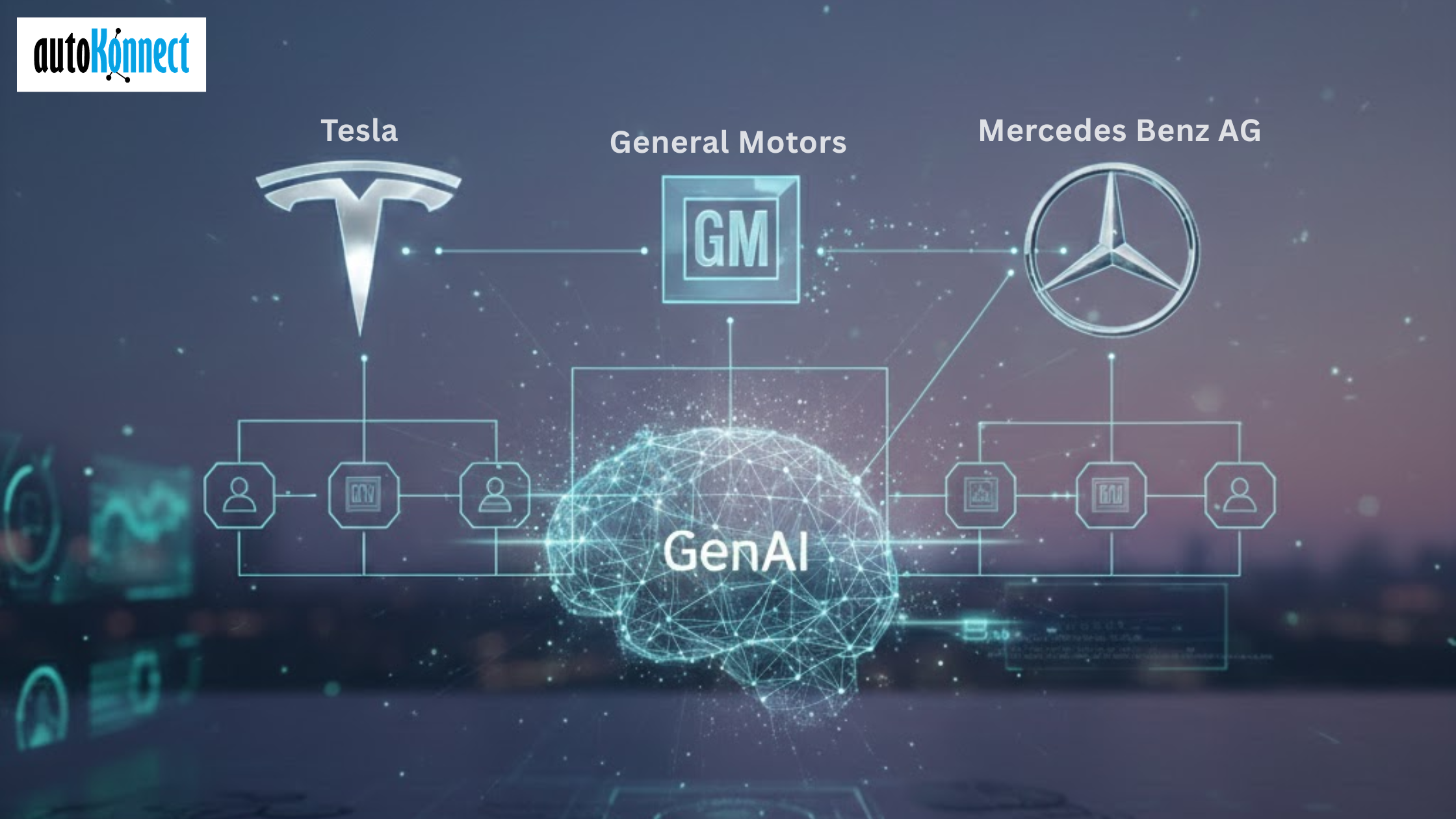
The automotive industry is no stranger to disruption, but late 2025 and early 2026 have brought a wave of executive changes that are quietly reshaping how decisions get made at the world's biggest auto companies like Tesla, General Motors, and Mercedes Benz AG.
For B2B marketers and sales teams targeting these enterprises, auto company org charts are no longer a "nice-to-have", they're the difference between reaching the right decision-maker and losing a deal to someone who did. And when backed with GenAI-driven insights, it becomes possible to track these continuously updated shifts, reach the right decision-makers, and drive deal conversions.
So, what's actually shifting at the top of major auto companies right now?
The changes are significant and they're happening fast.
- Tesla appointed Joe Ward, previously VP of EMEA, to lead global sales, service, and delivery in February 2026. This came amid continued leadership turnover in North America sales, meaning the chain of command for enterprise procurement and partnerships has fundamentally changed.
- General Motors (GM) saw Baris Cetinok, SVP of Software & Services Product Management, exit in December 2025, the third tech executive to leave within a single month. This is directly tied to GM's software restructuring under new Chief Product Officer (CPO) Sterling Anderson, signaling a complete reorganization of who owns technology decisions.
- Mercedes-Benz AG transitioned its design leadership when Bastian Baudy succeeded Gorden Wagener as Head of Design in February 2026. Wagener had shaped Mercedes' design language for decades, so his exit means new creative priorities, new vendor conversations, and a new decision-making personality at the top.
Does an executive change really affect who you should be talking to?
Absolutely. When a new SVP or VP steps in, their priorities, trusted vendors, and budget ownership shift with them. The stakeholder your sales team cultivated for months may no longer hold the same influence. Worse, a newly appointed leader often brings a mandate to reassess existing partnerships, creating both risk and opportunity simultaneously.
This is exactly why org charts of top auto companies need to be dynamic, not static PDFs downloaded from a company's investor page.
Then what makes automotive company org charts genuinely useful for sales and marketing teams?
A useful auto company org chart does more than show reporting lines. It answers:
- Who owns the budget for the solution you're selling?
- Which business units are undergoing change right now?
- Who reports to the newly appointed executive and who influences their decisions?
- What's the relationship between departments relevant to your offering?
When layered with contact intelligence and account context, the org chart of top auto companies becomes a living account map. The one that tells you not just who is there, but why they matter to your specific pitch.
Where do GenAI-powered automotive org charts change the game?
GenAI-powered platforms continuously update organizational structures by parsing signals like leadership announcements, restructuring news, and hiring data. For B2B teams targeting automotive enterprises, this means:
- Instant visibility into new decision-makers like Joe Ward at Tesla or Sterling Anderson's expanded team at GM
- Contextual account maps tied to your specific solution, not just generic hierarchy diagrams
- Personalized outreach grounded in current, accurate org intelligence rather than outdated contact lists
- Tracking of stakeholder movements across departments, so no relationship falls through the cracks
The global automotive company org charts available through GenAI-driven platforms don't just tell you the structure, they tell you where the doors are opening right now.
Conclusion:
The automotive company organizational structure is layered, regional, and constantly evolving. Unlike smaller enterprises, auto companies have distinct hierarchies for software, hardware, design, commercial, and regional operations, each with its own decision-making chain.
A B2B seller who approaches without this map is essentially cold-calling into an automotive giant intricacies with gut feeling. However, GenAI org charts give sales teams the accuracy they need to engage at the right level, with the right message, at the right time.
Navigating these changes raises a few important questions, here are the ones B2B teams ask most:
1. How often do executive changes happen in top auto companies?
Frequently, especially in software, design, and commercial functions. 2025 alone saw multiple C-suite and VP-level transitions at GM, Tesla, and Mercedes-Benz, among others.
2. How does a leadership change at an auto company affect vendor relationships?
New leaders often reassess existing vendor contracts and bring fresh procurement priorities. Early intelligence on these changes allows B2B teams to re-engage before decisions are finalized.
3. What's the risk of using outdated org charts for outreach?
High. Reaching out to a stakeholder who has departed or been deprioritized wastes the budget, damages credibility, and delays pipeline movement.
4. How does a GenAI-powered org chart differ from a LinkedIn search?
LinkedIn reflects self-reported data with significant lag. GenAI-powered auto org charts cross-reference multiple data signals to map verified hierarchies, reporting lines, and contact details which are updated continuously.
Staying ahead in automotive sales means knowing who's in the room before you walk in. CLICK HERE to explore how BizKonnect's GenAI-driven org charts help you map the right decision-makers across top auto companies and turn executive change into your competitive edge.