


An executive transition at the peak of an enterprise digital strategy exposes a hidden vulnerability in B2B technology sales: the immediate expiration of legacy vendor relationships.
When British retail giant Marks & Spencer appointed John Hunt as its new Chief Digital and Technology Officer (CDTO), poaching him from Australia’s Woolworths Group to succeed Sacha Berendji, it triggered a mandate 90-day evaluation window.
For B2B SaaS and IT infrastructure vendors, this executive transition represents an acute operational risk.
Incoming enterprise technology leaders rarely inherit existing software stacks with an intention to maintain the status quo. Instead, they enter with a mandate for aggressive digital and omnichannel retail expansion, armed with their own architectural preferences and proven vendor networks. The challenge for enterprise software sales teams is mapping the shifting internal power structures that dictate which platforms are preserved and which are ripped out.
Traditional market intelligence fails at this precise moment.
Mitigating this risk requires real-time, Generative AI-driven intelligence capable of translating leadership transitions into dynamic maps of digital, e-commerce, and cloud platform decision-makers.
How Executive Churn Fractures Legacy Vendor Contracts?
The arrival of a new CDTO signals an immediate shift from steady-state maintenance to aggressive structural audit. Incoming enterprise leaders must quickly identify operational redundancies, technical debt, and cost-inconsistencies across the retail ecosystem. Legacy vendor contracts, once considered secure due to high switching costs, become immediate targets for optimization or elimination.
During the initial 90 days, an incoming technology leader forces a series of operational reckonings across the infrastructure:
- Architectural Consolidation: Point solutions acquired by previous leadership to solve isolated e-commerce or supply chain friction are audited for compatibility with the new leader's long-term cloud vision.
- Fiscal Rationalization: Overlapping software capabilities across business units are aggressively consolidated to free up capital for core omnichannel initiatives.
- Performance Benchmarking: Existing service level agreements (SLAs) and platform efficiencies are measured against modern, cloud-native alternatives that the incoming executive successfully deployed in prior roles.
This operational audit creates a dangerous information asymmetry for incumbent B2B vendors. While a sales team may believe a relationship is insulated by historical performance, the incoming decision-maker is evaluating the software strictly through the lens of future scalability.
The playbook that won the contract three years ago is fundamentally misaligned with the strategic mandate of the new leadership team.
Uncovering the Hidden Layers of the Retail Company Organizational Structure
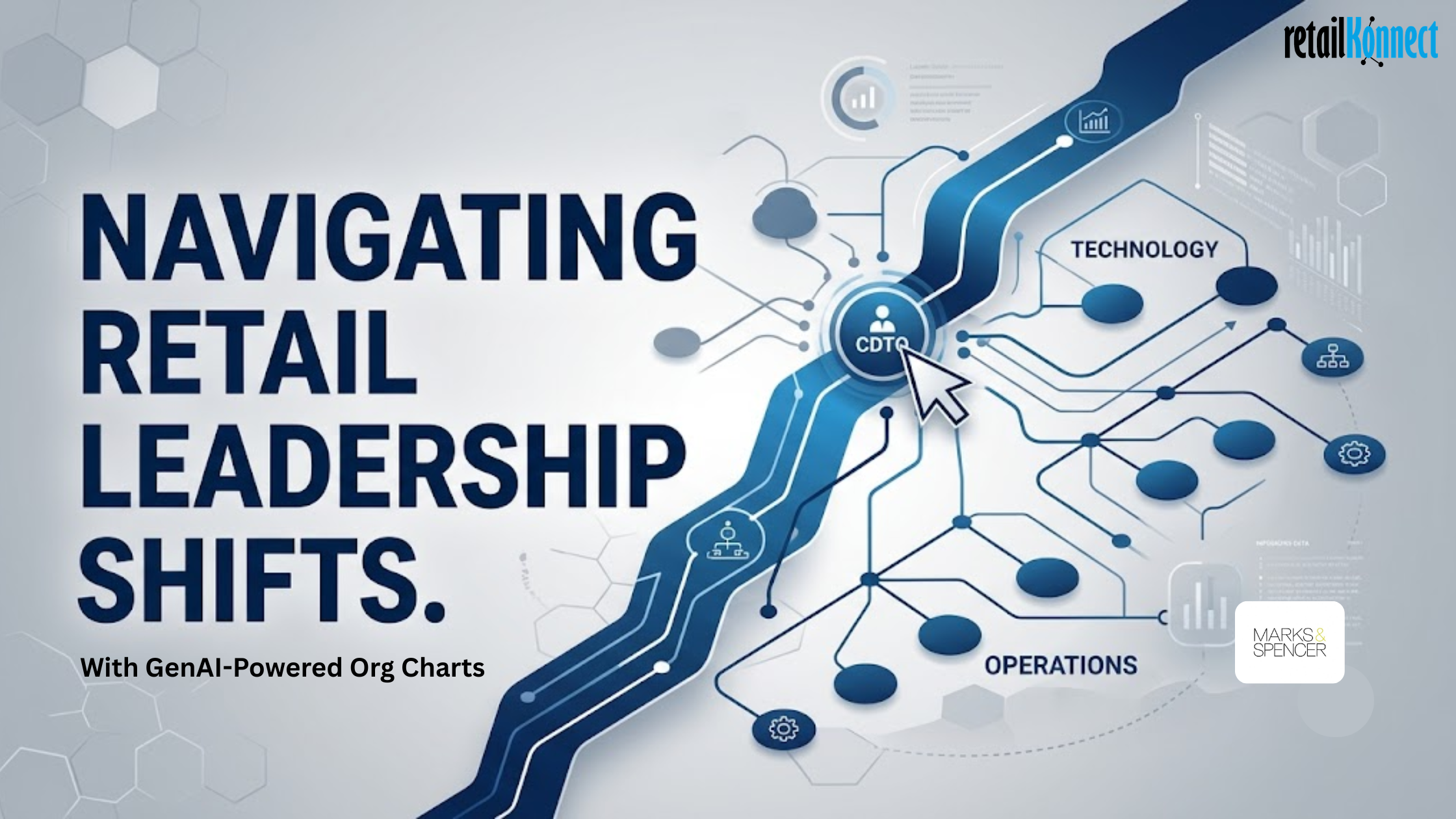
Enterprise software procurement in the tier-one retail sector is never a single-signer decision. It is governed by a complex, multi-layered retail company organizational structure where technical validation and commercial approval reside in entirely different silos. To navigate this matrix during an executive transition, sales teams must move beyond superficial titles and decode the functional hierarchy.
When analyzing retail company org charts to locate true platform ownership, the structure typically segregates along clear operational boundaries:
- The Digital and Technology Core
This layer, directly reporting to the CDTO, owns the architectural roadmap, API integrations, and cloud infrastructure. Key decision-makers include the VP of E-Commerce Platforms, Director of Cloud Architecture, and Head of Data Engineering. They care deeply about uptime, engineering velocity, and system interoperability.
- The Operational and Omnichannel Interface
Bridging the gap between digital systems and physical retail estates, this silo frequently reports through a matrixed structure to both the CDTO and the COO. Think positions like the Director of Omnichannel Experience or VP of Supply Chain Technology. Their primary metric is cross-channel transaction velocity and inventory synchronization.
Understanding who reports to the CEO in a retail company provides the baseline macro-structure, but the micro-level interfaces between technology directors and operational heads are where software purchases are actually validated or vetoed.
Without a granular view of this retail company hierarchy, outbound sales development reps waste valuable cycles targeting executive figureheads while losing the real evaluation battle happening three levels down.
Why Legacy Account Mapping Fails the Real-Time Test?
The central operational problem facing enterprise GTM teams is the velocity of decay in standard database records. Enterprise retail organizations are dynamic organisms; a single high-profile executive transition like the one at Marks & Spencer ripples into dozens of internal promotions, cross-departmental reassignments, and sudden strategy shifts.
Static contact databases offer a rear-view mirror perspective, delivering stale information that reflect where an organization stood six months ago. Relying on these legacy systems introduces severe downstream consequences:
- Misdirected Outbound Sequences: SDRs pitch displaced directors or out-of-date initiatives, signaling a profound lack of accounts-specific insight and destroying brand credibility.
- Undetected Account Churn Risk: Client success teams remain unaware that their primary internal champion has been shifted out of a decision-making silo until the non-renewal notice arrives.
- Missed Expansion Windows: New budgetary owners enter the organization with unallocated capital, but sales teams miss the window because the new internal reporting lines have not updated in their CRM.
To capture pipeline within the critical 90-day transition window, GTM teams require a fundamental tactical reframing: treating the retail organizational structure not as a static document, but as a real-time data stream.
How to Operationalize GenAI-Driven Org Charts for Strategic Account Mapping?
Navigating a massive retail business organizational chart during an active leadership transition requires moving away from manual tracking toward GenAI-driven intelligence mapping. By processing unstructured corporate announcements, financial filings, and real-time professional data, generative engines synthesize accurate, living blueprints of enterprise buying committees.
This account intelligence fundamentally shifts how enterprise sales teams plan their market approach, turning an executive transition from a defensive threat into an expansion opportunity:
- Immediate Triggers and Structural Deltas: The moment a new leader is appointed, the system automatically highlights every reporting line shift, identifying which directors have gained expanded budgetary authority and which platforms are vulnerable.
- Contextual Value Proposition Mapping: The technology correlates the incoming executive's past vendor history and strategic mandates with the current software stack of the target account, automatically surfacing precise operational gaps.
- Multi-Threaded Penetration Blueprints: Instead of relying on a single point of failure, sales platforms can orchestrate multi-threaded outreach across the technical validation tier and the commercial approval tier simultaneously.
Ultimately, enterprise software sales is a race against organizational inertia. When a major retail brand resets its digital leadership, the vendors who win are not those who wait for an RFP, but those who understand the new lines of internal influence before the first evaluation meeting is even scheduled.
Addressing Some Frequently Asked Questions (FAQs)
Q. How does a change in CDTO affect active software pilots or POCs?
Active proof-of-concept projects are highly vulnerable during a leadership transition. An incoming CDTO will routinely pause uncontracted implementations to verify that the software aligns with their long-term architectural vision and does not duplicate capabilities already present in their preferred tech stack.
Q. Where do enterprise retail org charts usually mask software purchasing influence?
Influence is frequently hidden within the business transformation and enterprise architecture units. These teams may not possess direct procurement authority, but they set the technical standards and compliance frameworks that can instantly disqualify a non-aligned vendor.
Q. Should outbound sales messaging change when targeting different tiers of a retail hierarchy?
Yes. C-suite outreach must focus on macroeconomic outcomes, margin preservation, and long-term digital scaling. Conversely, messaging directed at functional directors must focus on API flexibility, reducing deployment friction, and eliminating daily operational bottlenecks.
To insulate your enterprise pipelines against sudden executive transitions and instantly map the digital decision-makers driving the world's largest retail infrastructures, explore real-time organizational intelligence solutions today.
To discover how to transform enterprise retail data into actionable revenue pipelines, CLICK HERE to see what BizKonnect can do for your business.
CLICK HERE to know more with BizKonnect.