


As the calendar pages turn, with 2025 about to close and 2026 approaching, Tesla stands in the middle of rapid, high-stakes change. The company is:
- Accelerating toward software-centric vehicle development
- Scaling battery programs to strengthen its global EV position
- Restructuring parts of its supply chain to support new platforms and tighter production cycles
In this environment, Tesla’s organizational structure is not just large, it is fluid, cross-functional, and constantly evolving. Teams reorganize according to program priorities, regional demands, and production timelines tied to electric powertrain advances. For any high-value B2B solution provider, relying on static PDFs or spreadsheets is risky, because yesterday’s structure may no longer reflect today’s reality.
In this climate of high-value, high-pressure B2B engagement, understanding how responsibilities shift inside the company determines whether your outreach finds the right path. This is why to succeed in 2026, you need clarity that cuts through this movement and reveals the people tied directly to your value with the GenAI powered actionable org chart of Tesla.
Let’s get into this detail -
What Makes Tesla's Organizational Structure So Difficult to Navigate?
Tesla’s size, pace, and cross-functional model present a challenge that is different from a simple hierarchical chart. You are not just selling to a “Marketing Department.” You are working across divisions that function with their own leadership and technical mandates. So, you may encounter:
- Geographic Divisions: North America, Europe, Asia-Pacific, each with localized leadership and spending autonomy.
- Product/Brand Segments: Separate teams for different vehicle brands or segments, such as EV vs. Internal Combustion Engine for Toyota and Volkswagen.
- Deep Functional Silos: Departments like Global Powertrain Engineering, Advanced Manufacturing, and Procurement, which all hold distinct budgets and decision authority.
If your solution solves a problem in EV battery technology, you could spend months trying to find the right person in a traditional hierarchy. But a detailed Account Map of Tesla shows titles, their daily responsibilities, and their direct involvement with your specific offering.
How Really Does the "Old Way" of Tesla Account Mapping Fall Short?
Traditional account mapping of Tesla relies on manually collected information that quickly becomes outdated. It is like navigating a constantly evolving city with a five-year-old map. A static PDF or spreadsheet of Tesla fails to capture:
- Reporting lines as they shift across programs
- Project teams that form and dissolve around specific initiatives
- Cross-functional groups with budget or operational influence
It treats every leader equally, whether in Marketing or Powertrain R&D, even though only some roles matter for your EV component. There is no insight into their role in the decision-making process: budget owner, influencer, or end-user. This results in wasted outreach and lost opportunities.
Why is a Contextual, Dynamic Map of Tesla a Game-Changer for 2026?
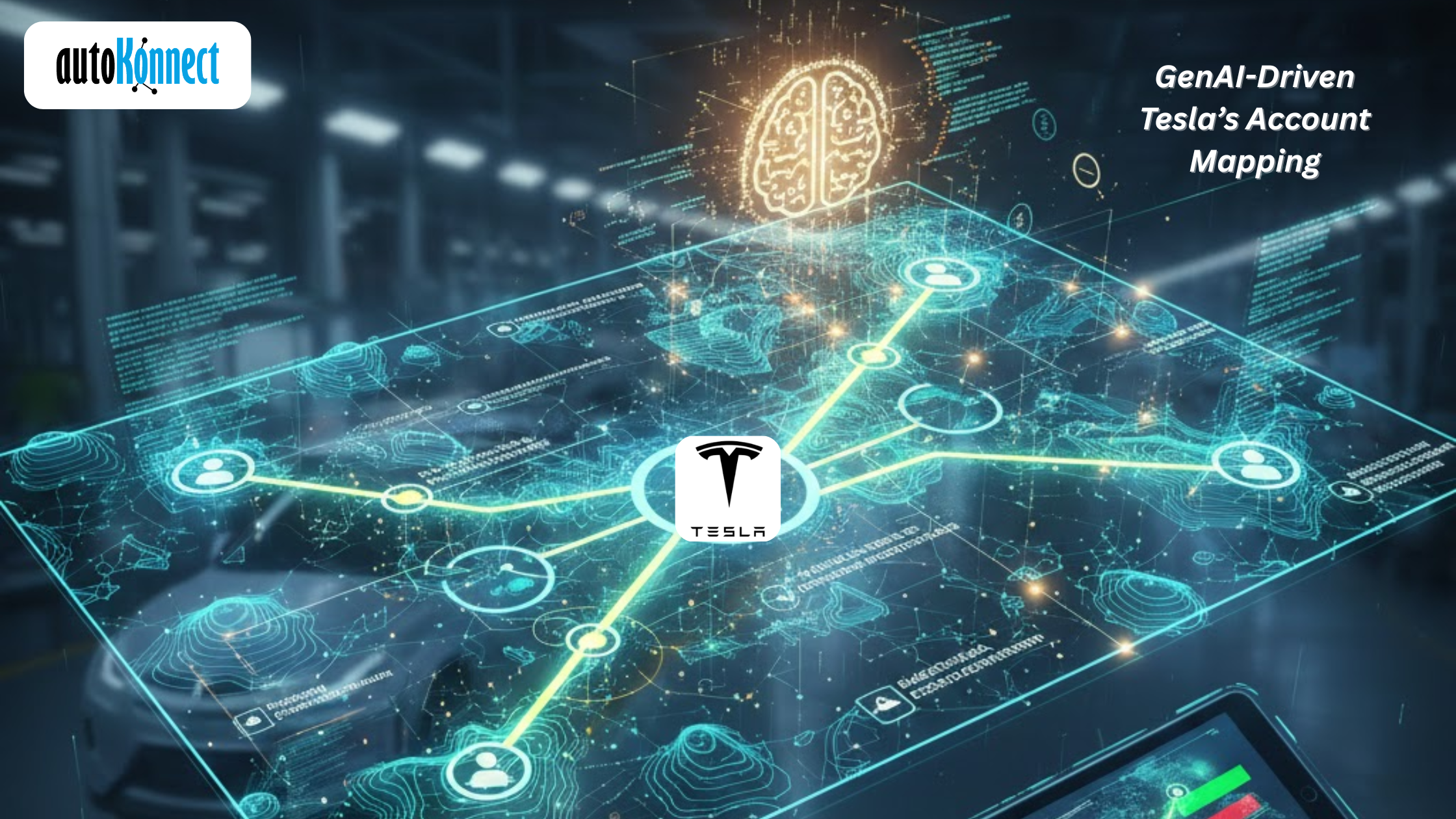
A modern, intelligently mapped account moves beyond mere hierarchy to illustrate relevance. It understands that the decision to purchase your EV battery thermal management system will only be made by specific business units and key individuals. This is the accuracy needed for the high-stakes engagements of the coming year.
A dynamic, contextual map of Tesla proves its value through:
- Pinpointing Relevance: When your solution is for EV battery tech, the dynamic map instantly highlights and links the key individuals in Powertrain R&D, Advanced Materials Procurement, and Supply Chain.
- Ignoring the Noise: It visually de-prioritizes or filters out irrelevant teams such as retail services or regional marketing.
- Personalized Strategy: Linking roles and business units directly to your solution’s value allows tailored messaging.
Because the goal isn't just to see the Tesla auto company org chart 2025; it's to see your path to the exact individuals who will champion your solution within that structure as you enter 2026.
What Does This Contextual Intelligence Into Tesla Enable?
Contextual mapping transforms your go-to-market strategy from a broad, speculative effort into a highly- focused conversation, leading to:
- Shorter Sales Cycles
- Higher Conversion Rates
- Strategic Relevant Unit Identification
In the fast-moving Tesla ecosystem, where billions are spent on innovation and supply chain security, the context of who you speak to will be the difference between a partnership and a dead end as 2026 approaches.
Let’s Address The Question Leaders Might Ask - FAQs
Q1. Is this approach useful for EV programs launching in 2026?
Yes. It draws attention to propulsion, battery, and validation leaders who influence next-generation technology adoption.
Q2. Can it keep up with frequent internal reorganizations?
It adapts as reporting lines shift within Tesla, ensuring that year-end planning reflects the most current structure.
Q3. Does it help with global supply chain alignment?
It identifies regional and central procurement owners connected to your materials or components, which shortens discovery time.
Q4. Can it support long-term account planning across multiple programs?
Yes. It brings consistency to your understanding of the organizational structure of Tesla, even as individual programs evolve across model years.
Get a glimpse into Tesla’s real org structure with BizKonnect. Request an org chart SAMPLE.
CLICK HERE to know more with BizKonnect.