


For years, outbound B2B sales campaigns relied on a simple formula:
- Merge an accurate email address with a first-name token
- Insert a dynamic company tag
- Mention a recent press release
That playbook is no longer just degrading; it is actively working against you.
The widespread adoption of natural language processing and aggressive email security filters has fundamentally rewritten the rules of inbox placement.
Automated filters now evaluate incoming messages for syntactic patterns typical of mass scale merge software, while enterprise buyers have developed an instant mental filter for shallow tokenization. When every prospect receives fifty emails a week opening with "I noticed you're the VP at [Company Name]," hyper-personalized tokens become a signal of low effort rather than genuine relevance.
To overcome this breakdown, forward-thinking go-to-market teams are abandoning point-in-time profile enrichment. Instead, they are integrating visual buying-committee mapping via GenAI-driven actionable org charts, adopting theme-based iteration, and deploying Campaign-as-a-Service (CaaS) for continuous execution frameworks.
The GTM engine is suffering from a fundamental structural breakdown: outbound volume has surged, yet genuine buyer connection has collapsed. Bridging this execution gap requires abandoning point-in-time profile enrichment and shifting toward dynamic account intelligence.
Why Is Conventional Account Enrichment Failing Modern Outreach Strategy?
Most revenue teams treat data enrichment as a static checkpoint. A list is pulled, verified against a basic firmographic database, and routed directly into automated sequencing platforms.
This approach fails because GTM environments are fluid, whereas point-in-time data is fixed. Enterprise decision-making rarely mirrors the rigid, linear hierarchy shown on standard corporate site directories. Internal restructurings happen quietly, buying power shifts laterally between departments, and regional business units operate under entirely different technology budgets.
When an account-based sales campaign relies on static lists, outbound reps end up pitching the wrong solutions to executives who lack purchasing authority for those specific initiatives.
Without a clear picture of how a prospect's internal team is structured, B2B lead generation devolves into a game of guesswork. The friction isn't caused by a lack of activity; it stems from a lack of structural clarity.
How Do Sales Teams Use GenAI-Powered Org Charts to Map Enterprise Buying Committees?
Navigating enterprise accounts requires clear visual intelligence of internal reporting structures and operational influence. Understanding how sales teams use GenAI maps reveals how modern GTM organizations replace flat prospect lists with actionable account mapping to build scalable outreach pipelines.
- Identifying Functional Champions: Sales organizations use visual reporting trees to identify actual decision-makers and mid-level influencers, rather than relying strictly on surface-level job titles.
- Uncovering Hidden Stakeholders: By mapping cross-departmental relationships, outreach teams locate secondary decision-makers who evaluate compliance, integration, and security behind the scenes.
- Reducing Dead-End Outreach: Real-time structural updates highlight recent leadership shifts and internal promotions, keeping sales reps from messaging departed or reassigned executives.
- Enabling Multi-Threaded Messaging: Account teams craft tailored value propositions across multiple connected roles, ensuring the overall narrative resonates across the entire buying unit simultaneously.
By replacing static database queries with dynamic account maps, revenue operations teams establish the structural foundation required for sophisticated narrative execution.
How Does Theme-Based Iteration Replace Superficial Personalization?
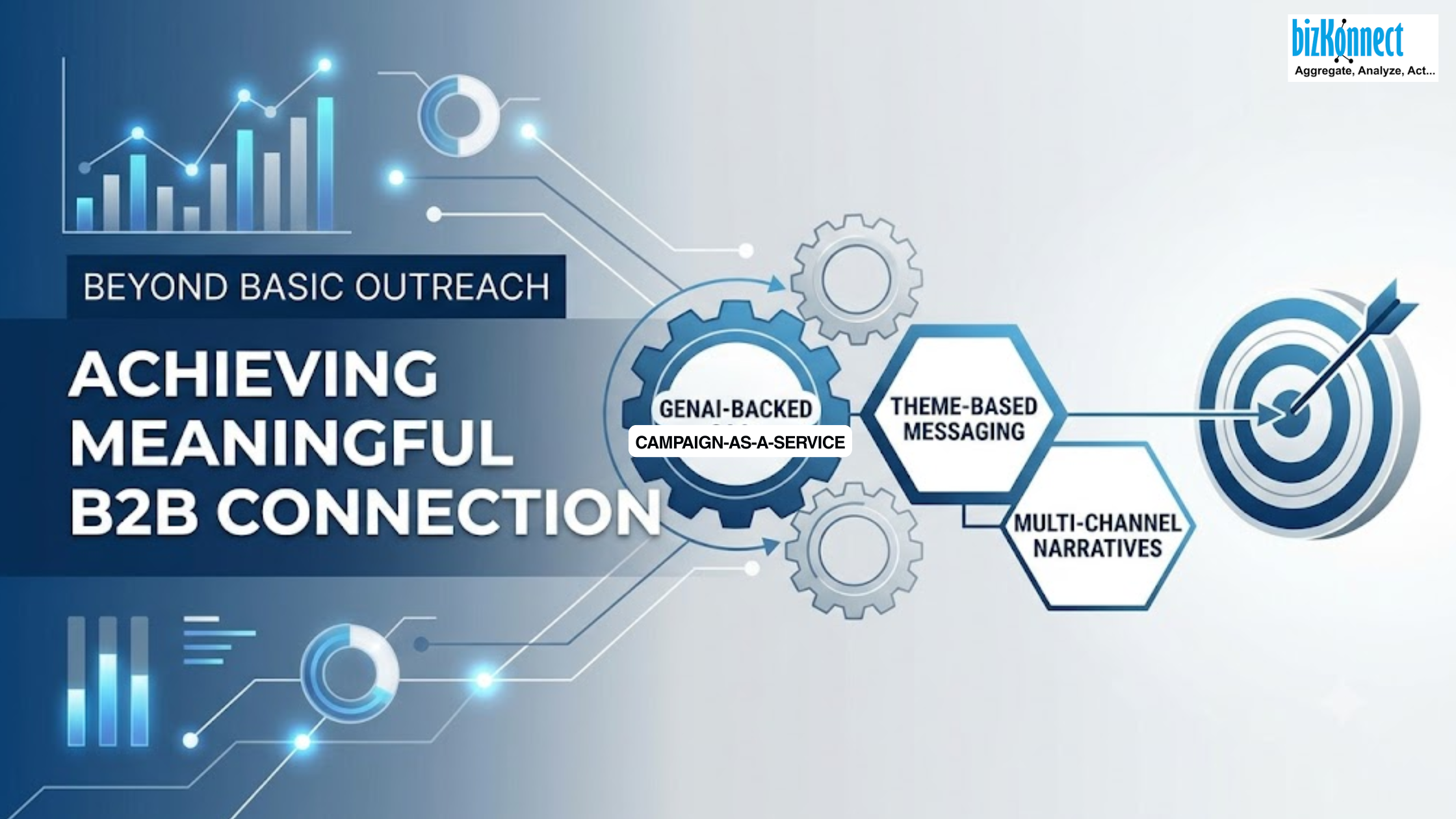
Once account structures are clearly mapped, the next challenge is communication strategy. Leading revenue teams are abandoning static line-by-line personalization in favor of theme-based iteration.
Instead of trying to customize every single email with superficial variables, theme-based iteration aligns messaging around high-priority business initiatives across the target organization. The narrative adapts based on functional priorities rather than individual names:
- For Executive Leadership: Focus on risk mitigation, capital efficiency, market expansion, and enterprise growth.
- For Operations Directors: Emphasize process throughput, workflow integration, system downtime reduction, and resource efficiency.
- For Technical Evaluators: Detail architecture compatibility, implementation timelines, security standards, and platform stability.
When an entire GTM motion operates on shared strategic themes, messaging feels cohesive, contextual, and relevant. The pitch reflects an understanding of the business problem rather than just a scraped LinkedIn profile.
Why Is Campaign-as-a-Service (CaaS) Essential for Scaling Outbound Execution?
Executing multi-threaded, theme-driven campaigns across enterprise markets requires significant operational support. For many organizations, internal GTM teams spend more time scrubbing contact lists, stitching together point solutions, and adjusting workflow templates than actually engaging with qualified prospects.
This operational overhead is why leading revenue organizations are turning to Campaign-as-a-Service (CaaS) models built on an agile B2B campaign platform.
A managed CaaS framework shifts outbound operations from fragmented manual tasks into a predictable, scalable asset. By pairing GenAI-driven account discovery with dedicated execution support, sales teams gain:
- Continuous Account Refresh: Target accounts are monitored dynamically for leadership changes, funding events, and operational shifts.
- Omnichannel Narrative Alignment: Content across cold outbound, social channels, and retargeting campaigns is continuously synced to target the same core operational challenges.
- Dynamic Content Optimization: Generative engines evaluate response patterns across buyer tiers to refine messaging angles in real time.
This combination shifts your GTM approach from scattered cold prospecting into a focused, systematic enterprise sales strategy.
Addressing Some Frequently Asked Questions (FAQs)
Q1. How does theme-based iteration differ from traditional dynamic tag personalization?
Dynamic tag personalization swaps static text fields (like {First_Name} or {Company}) into a generic template. Theme-based iteration restructures the entire message angle, positioning, and value proposition based on the strategic priorities and operational challenges of specific roles within an enterprise account.
Q2. Why are automated spam filters penalizing basic personalized templates?
Modern email security systems utilize advanced language processing to detect high-volume outreach patterns. When thousands of emails share identical syntax structures with only minor variable swaps, spam algorithms classify the traffic as automated bulk mail, severely harming domain reputation and inbox placement.
Q3. What makes dynamic org charts essential for multi-threaded enterprise sales?
Enterprise purchasing decisions are rarely made by a single decision-maker. Dynamic org charts reveal real-world reporting hierarchies, functional teams, and operational dependencies, allowing GTM teams to coordinate messaging across the entire buying unit rather than relying on a single point of contact.
Q4. How does a Campaign-as-a-Service (CaaS) model integrate with existing CRM setups?
A CaaS model sits alongside your existing tech stack, taking over raw data processing, account mapping, and campaign management workflows. Cleaned, enriched data and engaged prospect activity are routed directly back into your core CRM to keep sales reps focused entirely on high-intent conversations.
Q5. What metrics best measure the success of an account-based B2B campaign platform?
Instead of relying solely on open rates, measure account coverage depth, multi-threaded response rates, opportunity creation speed within target accounts, and total pipeline generated per account cluster.
Ready to upgrade your outbound engine beyond basic template tags? CLICK HERE to learn how BizKonnect uses actionable org chart intelligence and CaaS models to scale personalized account outreach.
CLICK HERE to know more with BizKonnect.