


The wine industry operates within a complex ecosystem where accuracy matters, from vineyard management to bottling technology and from compliance systems to distribution logistics. For winery equipment and technology vendors, reaching the right decision-makers within this intricate network often feels challenging.
This is where an actionable sales intelligence-driven wine industry email list becomes invaluable.
It transforms scattered outreach efforts into targeted conversations with procurement managers, operations directors, and technology buyers who actually hold purchasing authority.
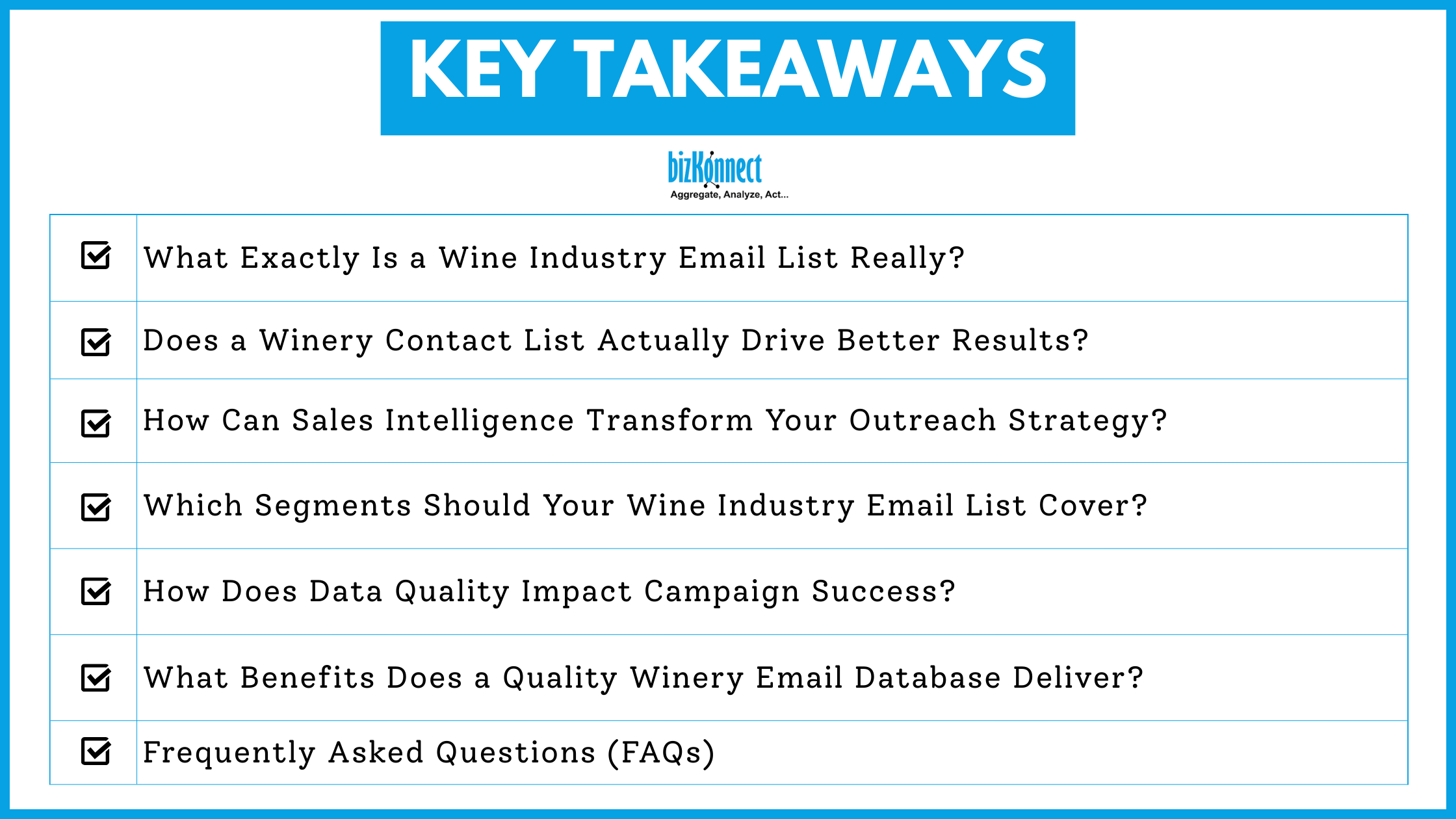
But, What Exactly Is a Wine Industry Email List Really?
It's a curated database containing verified contact information for key decision-makers across wineries, vineyards, and their supplier networks. Unlike generic mailing lists, these databases focus specifically on roles relevant to B2B transactions such as procurement specialists, operations managers, production supervisors, technical directors, and compliance officers.
The distinction matters because equipment vendors don't need to reach everyone at a winery. They need to connect with the three to five people who evaluate suppliers, review technical specifications, approve budgets, and sign purchase orders. A quality winery B2B leads database identifies these individuals by role, not just by company.
Does a Winery Contact List Actually Drive Better Results?
Yes, if it is backed with actionable sales intelligence. Getting past the gatekeepers in the winery ecosystem isn't easy because wineries don't operate like typical manufacturing businesses. Their buying decisions involve multiple stakeholders:
- Vineyard managers evaluating irrigation systems
- Production engineers assessing fermentation technology
- Compliance officers reviewing quality control software
- Operations directors comparing packaging equipment
Generic business databases rarely capture this nuance. They might list a winery's general contact information, but miss the specific roles responsible for equipment procurement or technology adoption.
A winery contact list built without sales intelligence ends up delivering your solution pitch to marketing coordinators instead of the engineering director who actually budgets for new pressing equipment.
How Can Sales Intelligence Transform Your Outreach Strategy?
Traditional contact lists provide names and email addresses, while actionable sales intelligence provides context. It answers questions that determine whether your outreach will resonate:
- Which wineries recently expanded production capacity?
- Who handles technology procurement for multi-location vineyard operations?
- What compliance requirements drive equipment upgrade cycles?
This intelligence layer transforms cold outreach into informed conversations. When you know a winery recently invested in sustainable production methods, your pitch for energy-efficient cooling systems becomes immediately relevant rather than generic. Ultimately, actionable sales intelligence turns data into strategic advantage.

Which Segments Should Your Wine Industry Email List Cover?
A proper wine industry email list for B2B marketing goes beyond surface-level data collection. It starts with understanding the winery value chain, identifying companies across:
- Vineyard services and agricultural technology
- Winemaking equipment and fermentation systems
- Bottling, packaging, and labeling solutions
- Compliance, quality control, and laboratory equipment
- Logistics, warehousing, and distribution technology
- Professional services supporting winery operations
Each segment requires different messaging and targets different decision-maker profiles. Sales intelligence provides segmented, role-verified lists that align with how purchasing actually happens within these organizations.
How Does Data Quality Impact Campaign Success?
Not all wine industry email lists deliver equal value. Quality indicators include multi-level validation confirming company relevance and proper categorization, role and function verification ensuring contacts match their stated responsibilities, and deduplication preventing embarrassing duplicate emails to the same decision-maker.
Data quality directly impacts sender reputation and deliverability. Poor-quality lists generate bounce rates that damage your domain credibility, making future outreach, even to valid addresses, more likely to land in spam folders.
What Benefits Does a Quality Winery Email Database Deliver?
The benefits of a winery email database built on sales intelligence extend throughout your entire sales cycle:
- Precision Targeting: Connect with decision-makers based on their actual responsibilities rather than sending generic messages to info@ addresses.
- Geographic Relevance: Segment by wine regions with distinct production characteristics. Equipment needs differ significantly between Napa Valley boutique wineries and large-scale operations.
- Reduced Sales Cycles: When your initial outreach reaches the right person with the right message, you skip weeks of internal forwarding and qualification calls.
- Higher Response Rates: Role-verified contacts mean your emails land in inboxes of people who actually care about winery equipment innovations, not HR coordinators or tasting room managers.
A well-structured, actionable sales intelligence-driven wine industry email list turns scattered prospecting into focused engagement. For winery equipment and technology vendors, this is a practical path to reach the right people, in the right wineries, with messages that match real operational needs.
Frequently Asked Questions (FAQs)
With these challenges and solutions in mind, several practical questions emerge that vendors frequently encounter when implementing targeted outreach strategies. Let’s address them:
Q1: How frequently should wine industry email lists be updated?
Quarterly updates maintain optimal accuracy. The winery industry experiences significant role changes, particularly after harvest seasons and around budget planning cycles.
Q2: What makes a winery contact list different from general manufacturing databases?
Winery operations involve unique roles like enologists, viticulturists, cellar masters alongside traditional procurement positions. Specialized lists identify both technical experts and business decision-makers who jointly influence equipment purchases.
Q3: Should lists include both wineries and their supplier ecosystems?
Absolutely. Reaching vineyard service providers, contract bottlers, and compliance consultants creates multiple entry points into winery decision-making processes, particularly for infrastructure technology spanning the entire production chain.
Q4: Can email lists be segmented by winery size or production volume?
Yes. Boutique wineries have different equipment needs and budgets compared to operations. Tailoring outreach by production scale significantly improves relevance.
Not sure if your winery outreach is landing with the right buyers? Discover what role-verified, sales intelligence-driven wine industry contact data actually delivers. CLICK HERE to access a tailored and FREE winery decision-maker intelligence sample across equipment buyers, operations directors, and procurement specialists.
CLICK HERE to know more with BizKonnect.