


Year-End “Slowdown” Is Mostly a Myth.
Many sales teams quietly switch to holiday mode around mid-November. Calendars fill with out-of-office replies, and the thinking is that nobody is buying anyway.
But buying decisions don’t follow your calendar. Recent research shows evaluation is now the longest stage of the buying journey for 40% of software buyers, and one buyer research study found that a typical purchase involves around 13 internal stakeholders and nine outside influencers. Decisions of that size take weeks of quiet groundwork. Much of that groundwork happens right now, whether or not anyone is picking up the phone.
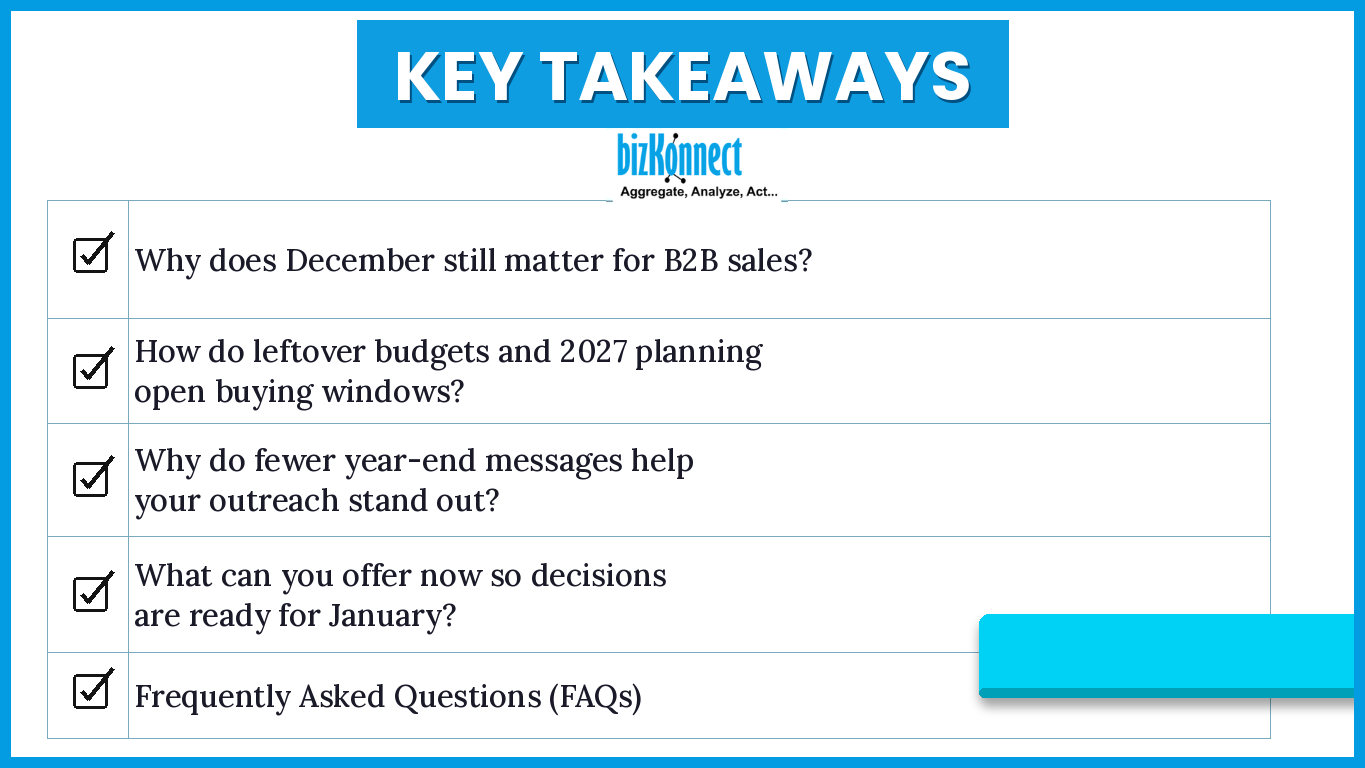
Here are five reasons to stay in the conversation.
1. Current-Year Budgets Still Need a Home
Many companies enter the last quarter with money left to spend. Teams that don’t use it risk losing it, or having next year’s allocation trimmed. That makes this a natural time for buyers to approve projects that have been sitting on a wish list.
What to do: Share short, clear content on quick-start options, pilot programs, or phased rollouts that can fit into a remaining budget. A prospect who can say yes to a small step before December 31 is easier to win than one who needs a giant leap. Leverage actionable sales intelligence.
2. 2027 Budgets Are Being Written Right Now
Planning season is when vendors get added to or left out of next year’s numbers. Even if a contract is signed in January or February, the research, comparisons, and internal conversations are happening today.
Finance teams are also paying closer attention. G2 reports that finance involvement in software decisions rose from 31% to 46% in a single year, and 49% of buyers said a CFO had reversed an already-approved purchase in the past 12 months.
What to do: Make it easy for your champion to defend the spend. Publish ROI examples, cost-of-doing-nothing explanations, and plain-language pricing guides. Give people something they can forward to their finance lead without needing you in the room. But before that, work on ICPs.
3. Fewer Messages Mean Better Odds of Being Noticed
When many companies pause outreach, inboxes and feeds get lighter. A useful, well-timed message has a better chance of being read than it would in a crowded week in March.
The key word is useful. Quiet doesn’t mean you should flood people. Send fewer, sharper touchpoints: a planning checklist, a short benchmark, a helpful comparison.
What to do: Lead with value, not a pitch. Think “How to prepare your 2027 vendor shortlist” rather than “Book a demo today.”
4. Decision-Makers Have Room to Think
Year-end often brings a slower meeting schedule. That gives leaders time to read, compare, and plan the projects they want running by Q1.
Forrester notes that more than 60% of business buyers now use a trial or similar hands-on test to reduce risk, and G2 found that IT security review is the biggest delay between choosing a vendor and completing a purchase (39%). Both take time, and the slower weeks are a good time to get them started.
What to do: Offer trials, sandbox access, security documentation, and implementation outlines now, so the technical and compliance checks are finished by the time budgets reopen.
5. Early Engagement Gives You a January Head Start
Buyers who begin evaluating in December often start the new year with a shortlist ready. Those who wait begin from zero in January, competing with everyone else for attention.
Shortlists also form earlier than they used to. According to G2, more than 80% of buyers have used an AI chatbot to source software recommendations, and those buyers were more likely to purchase from their initial shortlist. Once a name is on that list, it’s hard to displace.
What to do: Keep your presence strong everywhere buyers look. That means up-to-date website content, honest customer reviews, clear comparison pages, and visible proof of results. Consult with experts who can help you reach out with iterative, theme-based, and account-driven campaigns.
Your Year-End Visibility Checklist
- Review your open opportunities and reach out with a helpful next step, not a “just checking in.”
- Publish one planning-focused resource for 2027 budget owners.
- Refresh pricing, FAQ, and comparison pages so AI tools and buyers find accurate information.
- Prepare a short business case template your champions can share.
- Line up your January follow-ups now so momentum doesn’t stall.
Frequently Asked Questions
Is it worth doing B2B sales outreach in December?Yes, if the outreach is relevant and low-pressure. Buyers are still planning, evaluating, and using leftover budgets. Helpful content and thoughtful follow-ups keep you on their radar.
Why do 2027 budgets matter for sales now? Budget planning decides which vendors and projects get funded. If you’re not visible during planning, you may not be considered when money is allocated.
What kind of content works best at year-end? Practical, easy-to-use material: planning checklists, ROI explainers, pricing guides, case studies, and short trial or onboarding overviews.
How can I avoid sounding pushy during the holidays? Focus on being useful. Share insight, ask about their plans, and offer to help with next-year priorities instead of pressing for an immediate close.
Should I expect deals to close before the year ends? Some will, particularly where budget needs to be used. Many others will close in January or February, but they’ll go to the vendors who stayed engaged earlier.
Don’t let the next six weeks pass in silence. If you’d like help planning year-end outreach, building content that reaches decision-makers, or turning early conversations into January wins, BizKonnect is here to help. Get in touch today and start 2027 with decisions already in motion.
CLICK HERE to know more with BizKonnect.