


For nearly two decades, B2B digital transformation meant converting analog friction into digital self-service where portals replaced catalogs, online forms superseded phone orders, and search engines became the primary engine for buyer research.
Yet, despite these digital investments, enterprise buying cycles have hit an operational wall.
Buyers now spend most of their purchasing journey conducting independent online research before ever speaking to a sales representative. They accumulate context across dozens of fragmented touchpoints, reading whitepapers, evaluating specs, and comparing vendors.
However, this shift toward self-guided discovery has exposed a critical execution gap: finding information is no longer the bottleneck, taking action is.
While research has digitized, the transaction mechanics remain stubbornly manual. Modern buyers are forced to act as human middleware. They research via one channel, manually aggregate product codes, cross-reference pricing tiers against contracts, and send emails back and forth with procurement just to build a cart. The traditional self-service model has reached its limit because it digitizes information retrieval while leaving the administrative weight of the purchase fully on the buyer's shoulders.
Why are Traditional B2B Sales Campaigns Failing the Modern Self-Researching Buyer?
When procurement teams shift heavily toward self-research, conventional outreach strategies implode. Traditional B2B marketing campaigns built around gated assets, static lead scoring, and automated nurture sequences assume a predictable, linear buyer journey. They attempt to pull buyers into human sales conversations early, treating discovery as an opportunity to pitch.
This creates a fundamental disconnect between how vendors want to sell and how buyers actually buy:
- Contextual Fragmentation: Buyers extract technical specifications and contract parameters from unstructured PDFs, legacy ERP portals, and third-party reviews. When vendors respond with generic email follow-ups, they ignore the sophisticated research the buyer has already completed.
- The "Lead" Trap: A buyer downloading a spec sheet is rarely looking for a phone call; they are looking to validate a technical capability. Treating high-intent research as a signal for aggressive outbound sales drives friction instead of pipeline velocity.
- Outdated Personalization: Traditional segmentation groups buyers by firmographics or basic job titles. It fails to account for the actual technical parameters, commercial constraints, or active procurement timelines driving the purchase decision.
To overcome this friction, enterprise marketing must pivot from broad broad-net outreach toward an integrated account based marketing strategy. Rather than pushing static content down a funnel, vendors need go-to-market systems capable of recognizing high-intent research signals and serving actionable, parameter-driven responses in real time.
What Breaks When B2B Lead Generation Shifted from Discovery to Execution?
As buyers gain total control over discovery, traditional metrics for B2B lead generation lose their predictive power. Generating raw top-of-funnel interest no longer guarantees revenue velocity. The modern conversion breakdown occurs at the exact moment discovery transitions into execution.
When an enterprise procurement process requires evaluating hundreds of complex SKUs, unstructured custom contracts, and variable volume discounts, human cognitive bandwidth becomes the primary point of failure.
Consider the structural points where traditional execution stalls:
- Unstructured Data Processing: Technical documentation, line-item specs, and master service agreements (MSAs) sit in unstructured formats like PDFs. Buyers waste days manually cross-referencing these documents against vendor catalogs.
- Negotiation Overhead: Commercial terms, volume-based pricing, and custom SLAs require manual review. Each round of minor commercial clarification adds weeks to the deal cycle.
- Cart Assembly Friction: In complex B2B categories, building a cart is not a simple click-and-buy event. It requires matching part numbers, verifying compatibility, validating stock across distribution centers, and applying pre-negotiated tier discounts.
When these operational barriers mount, buyer momentum dies. Deals stall not because the buyer lost interest, but because the mechanical effort of structuring the purchase eclipsed the perceived urgency of the solution.
How Does Theme-Based Account Based Marketing Orchestrate Agentic Buyer Journeys?
To serve a buyer that expects instant execution, go-to-market architecture must evolve from static touchpoints to theme-based campaigns designed for autonomous commerce. Instead of running disjointed channel tactics, modern account based marketing organizes campaigns around hyper-specific commercial and operational themes.
Theme-based campaigns frame the buyer's explicit operational challenge such as supply chain optimization or legacy infrastructure modernizing and map it directly to machine-readable execution pathways.
When executing theme-based B2B email marketing campaigns, the messaging avoids generic fluff. Instead, it delivers structured data, interactive configuration logic, and clear parameters that both human buyers and their autonomous AI proxies can parse immediately:
- Structured Intent Capture: Directing buyers from targeted outreach straight into interactive discovery engines that expose real-time inventory, dynamic pricing logic, and compatibility matrices.
- Autonomous Negotiation Readiness: Exposing defined commercial parameters (e.g., volume thresholds, delivery windows, payment terms) directly within the campaign assets, allowing buyer agents to evaluate commercial viability instantly.
- Programmatic Cart Creation: Enabling the buyer’s system to read product specifications, match them against their internal requirements, and automatically assemble a verified, contract-compliant order cart without manual line-item entry.
This transformation elevates B2B campaigns from passive brand awareness into active digital commerce infrastructure.
From Chat Interfaces to Autonomous Action: The Rise of Agentic Commerce
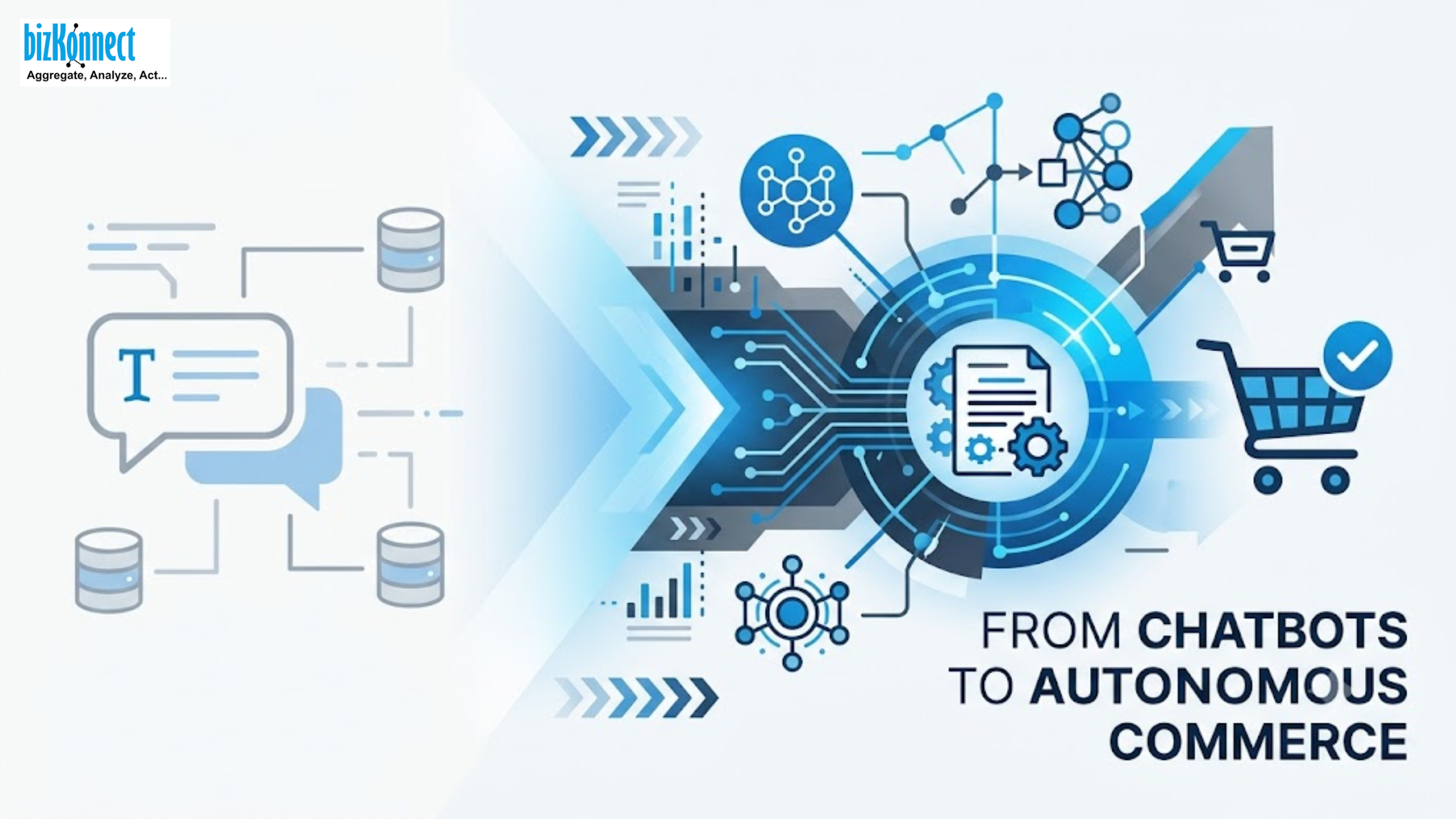
The initial wave of conversational AI brought chatbots that answered basic FAQs. However, simple chat interfaces still leave the heavy lifting to the human user. The true structural shift in modern enterprise sales is the transition to fully autonomous agentic commerce.
As highlighted in recent analyses on agentic commerce in B2B, enterprise buying is moving beyond basic conversational assistance toward complete operational autonomy. Autonomous B2B AI agents do not merely suggest answers, they execute multi-step workflows against explicit business logic.
An agentic commerce engine fundamentally alters the buyer-seller interface through three core capabilities:
- Reading Unstructured Data: AI agents digest complex technical documentation, legacy purchase orders, and multi-page RFPs, automatically extracting parameters and translating them into precise SKU configurations.
- Negotiating Within Defined Parameters: Vendors program their sales engine with clear policy guardrails such as allowable discount margins, minimum order quantities, and payment terms. Buyer AI agents negotiate directly against seller AI agents to reach an optimal, compliant agreement in seconds rather than weeks.
- Autonomous Cart Building: Once terms are aligned, the AI agent builds the complete cart, applies contractual pricing rules, runs compatibility validations, and prepares the checkout payload for procurement approval.
By removing the friction between decision-making and execution, agentic commerce reclaims buyer velocity and transforms static marketing channels into active revenue engines.
Frequently Asked Questions (FAQs)
Q1. What are the best B2B sales campaigns for driving fast execution?
The most effective sales campaigns combine theme-based messaging with structured, actionable product data. Rather than directing leads to gated content, these campaigns drive buyers directly into interactive tools, configurators, or machine-readable portals that accelerate decision-making and cart creation.
Q2. How does agentic commerce impact traditional B2B email marketing campaigns?
Agentic commerce shifts email marketing from static messaging to data-rich triggers. Outreach includes direct links to structured spec sheets, API-driven pricing models, and direct cart-building interfaces that allow buying agents or high-intent buyers to take immediate commercial action.
Q3. How do AI agents negotiate B2B deals without human intervention?
AI agents operate within strict, pre-configured business rules set by revenue operations and finance teams. These parameters define acceptable price floors, volume discount tiers, contract lengths, and payment terms. The agent negotiates within these guardrails, escalating to human managers only when a request falls outside approved margins.
Q4. What is the role of unstructured data in modern B2B lead generation?
A vast majority of enterprise buying criteria resides in unstructured documents like RFPs, legacy contracts, and spec sheets. Modern lead generation systems use AI agents to ingest and structure this data instantly, turning raw buyer inputs into accurate, configured solutions without requiring manual data entry.
To see how high-performing B2B organizations are structuring data and orchestrating hyper-targeted campaigns for complex enterprise buyers, CLICK HERE to explore actionable go-to-market solutions with BizKonnect.
CLICK HERE to know more with BizKonnect.