


Most companies that struggle in the US are losing on timing, trust, and access, rather than the product. A sales team optimised for another market walks into the US assuming that what worked before will translate.
It rarely does.
US B2B buyers in 2026 are more informed, more skeptical of cold outreach, and more selective about who gets a meeting. Meanwhile, the companies expanding into this market are often running playbooks built for a different era: hiring a single rep, hoping for traction, and pulling back when pipeline doesn't materialise in ninety days. The issue here is actually architecture.
Breaking into the US today requires a blend of local cultural nuance and high-velocity intelligence.
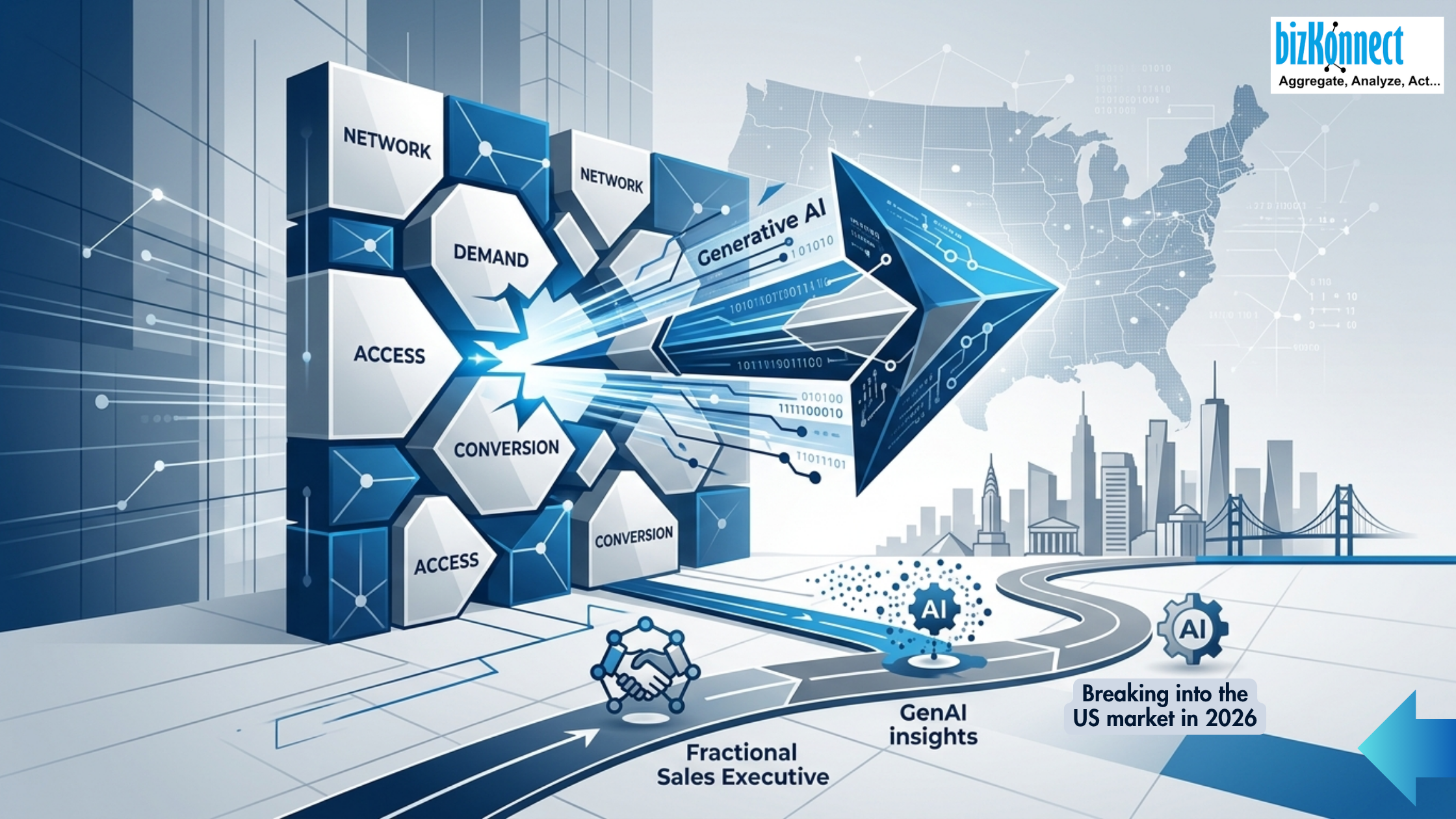
The modern buyer psychology demands a sales leader who possesses a ready-made network to bypass gatekeepers and the fluid ability to move from a Zoom demo to a face-to-face dinner in Manhattan or Silicon Valley within the same day. This is where the fractional sales executive model, backed by GenAI insights, has moved from a "budget option" to a strategic necessity for global companies.
This blog explores what has changed, how a fractional sales model de-risk US expansion, and how to adapt with a practical, execution-ready model.
What is Changing in US Buyer Behavior and Why Does Your Sales Strategy Feel Outdated?
In 2026, the US B2B buyer journey is a "looping" process where stakeholders enter and exit the conversation at will. Buyers now expect vendors to understand their specific vertical challenges before the first "Hello."
- Self-Serve Research is the Default: Buyers complete most of their evaluation before ever talking to a sales rep. If you don't have a local presence providing "boots on the ground" intelligence, you are invisible during this critical phase.
- The Trust Gap: With the explosion of AI-generated spam, US decision-makers have retreated into private networks and peer-led communities. An overseas caller with no local context or shared network is immediately filtered out as "noise."
- The Hybrid Paradox: While digital research is high, the final stage of a high-value deal has returned to being an in-person requirement.
To bridge this gap, companies are moving toward a US market entry strategy for SaaS companies that prioritizes "Fractional Leadership." This does not just save money, it also deploys a "Country Manager" persona who already lives in the buyer's world.
What is the Fractional Sales Model and How Does GenAI De-risk US Expansion?
A fractional sales executive is a seasoned veteran, often with 15+ years of experience, who operates as your local US Country Manager on a part-time or project basis. When backed by GenAI, this role becomes a force multiplier for international brands.
Instead of hiring a junior SDR who requires months of training, the fractional model embeds a senior leader who carries your business card, uses your email domain, and represents your brand at US industry events. They make calls as well as open doors that are usually locked to outsiders.
The "Intelligence" component of this model is what makes it sustainable in 2026. GenAI helps to write emails and also analyzes the buyer decision journey in the US by:
- ICP Refinement: Identifying Ideal Customer Profiles (ICPs) from the executive’s existing network.
- Intent Tracking: Monitoring who is opening emails, clicking specific technical links, and engaging with LinkedIn content.
- Predictive Analytics: Analyzing which messages are resonating in real-time to pivot the pitch before the next meeting.
This combination ensures that the fractional executive isn't wasting time on cold leads. The backend "Business Analyst" uses AI to curate attendee lists for events and provides deep intelligence on a prospect’s current pain points, allowing the local rep to walk into a meeting fully armed with data.
How Can You Execute a High-Impact US Sales Strategy on a Lean Budget?
The cost of a full-time, high-level US sales VP can easily get exceeded. For most companies, this is a massive challenge. The fractional integrated solution offers a structured, three-step framework to achieve the same ROI at a fraction of the cost.
Step 1: Aligning the Local "Face" of the Company
You need an American executive who understands the local domain. This person serves as your Country Manager. They handle the "high-touch" moments:
- Conducting live product demos tailored to US business logic.
- Attending regional trade shows and gathering high-value "card exchanges."
- Managing the final stages of the closing process where cultural alignment is non-negotiable.
Step 2: The Identify & Connect Engine
Behind the executive, a personalized engine identifies the ICP for:
- Personalized Campaigns: Using GenAI to craft messages that feel human and relevant to the executive’s network.
- Multi-Channel Support: Syncing LinkedIn outreach, professional email sequences, and local calling support.
Step 3: Tracking, Monitoring, and Agile Pivoting
One of the biggest risks of remote hiring is not knowing what your US rep is actually doing. The integrated fractional model solves this through:
- Transparent Reporting: Real-time dashboards showing clicks, opens, and response sentiment.
- Low-Risk Commitment: Most fractional models operate on a short-notice exit (often as little as one week), ensuring you only pay for performance and momentum.
What are the Practical Benchmarks for a Successful 2026 US Market Entry?
Success in the US market is often a challenge, but the fractional model provides "sprints" of value. To evaluate if this
model is working for you, look for these specific indicators:
| Metric | Traditional Remote Model | Fractional + GenAI Model |
|---|---|---|
| Time of First Meeting | 4-6 months | 4-6 weeks |
| Lead Quality | High volume, low intent | Low volume, high SQL conversion |
| Cost of Entry | High (Fixed Salaries + Travel) | Low (Fractional Fee + Success Milestones) |
| Market Intelligence | Secondary (Reports) | Primary (Direct feedback from US leads) |
The US market in 2026 waits for no one. If you are ready to stop "exporting" and start "embedding," it is time to look at a model that combines veteran human intuition with the speed of GenAI.
Addressing Frequently Asked Questions (FAQs)
Q1. How quickly can a fractional sales executive start generating qualified pipelines in the US?
With the right domain network and a clear ICP brief, initial warm outreach and first meetings typically begin within the first two to four weeks. Pipeline qualification follows within the first 60 days, depending on sales cycle length in your category.
Q2. Is the fractional model suitable for SaaS companies with long enterprise sales cycles?
Yes, particularly because long-cycle sales require sustained relationship development and consistent follow-up, both of which a fractional exec with domain expertise is well-positioned to manage. The backend analyst support ensures pipeline tracking stays rigorous across extended timelines.
Q3. How do you maintain visibility into what a fractional US sales executive is doing?
Through structured weekly reporting on activities (calls, meetings, events), pipeline stage tracking, email and LinkedIn campaign analytics, and shared CRM access. Clear deliverables agreed upfront make performance transparent.
To learn how to deploy a fractional sales team that delivers maximum ROI with minimum risk, CLICK HERE to explore how BizKonnect can accelerate your US market entry.
CLICK HERE to know more with BizKonnect.