


Corporate gifting has become part of several business processes, from employee recognition and onboarding to customer appreciation, sales relationships and corporate events. That makes the market broader than it first appears.
It also makes one question particularly important for companies selling corporate gifting solutions: who actually buys them?
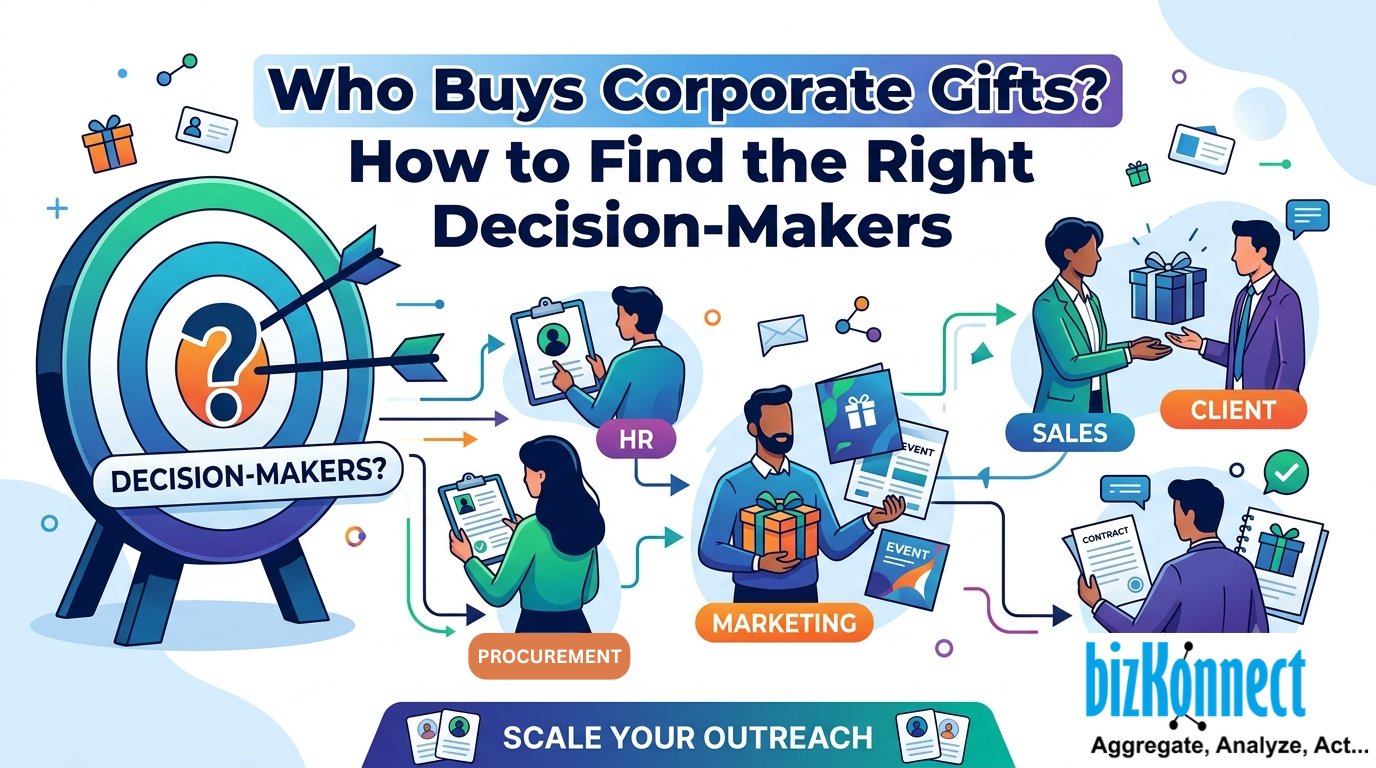
The answer depends on why the company is giving in the first place.
An HR team may need gifts for employee milestones. A Marketing team may be planning gifts for customers or an upcoming event. Sales may want to recognize strategic accounts. Procurement may become involved when a company is selecting or approving a vendor. Understanding these different buying situations can make corporate gifting prospecting much more precise.
Corporate Gifting Is No Longer Just a Seasonal Purchase
Holiday gifts remain part of the market, but corporate gifting now covers many more occasions.
Companies use gifts for new-hire onboarding, work anniversaries, employee recognition, customer milestones, conferences, sales incentives, partner relationships and other moments where a physical or digital reward can strengthen a business relationship.
Current industry research reflects that broader use.
A recent market report found that 356 of the 400 organizations surveyed offered employee rewards and recognition programs, while 313 offered sales incentive programs and 185 offered channel reward programs. The research also found that gift cards remained the most widely used reward, accounting for 30% of program allocations in North America. For companies selling corporate gifting solutions, that matters because the potential market is not confined to one department or one annual buying cycle.
HR and People Teams Are Important Buyers
Human Resources is one of the most relevant functions for employee-focused corporate gifting. HR and People teams may manage employee recognition, onboarding, anniversaries, milestone celebrations, culture initiatives and other employee experience programs.
Relevant titles can include:
- Chief Human Resources Officer
- Chief People Officer
- VP or Director of HR
- Head of People
- Employee Experience leader
- People Operations leader
- Total Rewards leader
- Employee Engagement leader
The business case is also becoming more closely connected to employee experience.
A ‘State of the Workplace’ research found that 72% of HR professionals believe employees have higher expectations of employers today. The report also identified employee experience as a leading priority for HR in 2026, based on research involving more than 1,800 HR professionals and 2,000 workers. That does not make gifting a solution to every employee a challenge. It does, however, explain why recognition and meaningful employee moments remain relevant conversations for HR teams.
Marketing Teams Buy for Different Reasons
Marketing is another important buying function, particularly when gifting supports customers, prospects, events or brand campaigns. A Field Marketing team might need gifts for an industry conference. A Demand Generation team could use gifting within an account-based campaign. Customer Marketing might send gifts around renewals, milestones or advocacy programs.
Potential contacts include:
- CMO
- VP Marketing
- Marketing Director
- Field Marketing Director
- Demand Generation leader
- Customer Marketing leader
- Events Marketing leader
- Brand Marketing leader
The prospecting approach should change with the use case.
An HR leader may be interested in employee recognition. A Field Marketing leader may be thinking about event engagement. A Demand Generation leader may be evaluating gifting as part of an account-based campaign. The same product can therefore enter the organization through very different business conversations.
Sales and Customer Success Can Be Buyers Too
Corporate gifting can also support revenue relationships. Sales teams may use gifts to strengthen relationships with strategic accounts, recognize important milestones or support high-value customer conversations. Customer Success teams may use them around renewals, anniversaries and other relationship moments.
Relevant roles can include:
- Chief Revenue Officer
- VP Sales
- Sales Director
- Strategic Account Director
- Customer Success Director
- Head of Customer Experience
- Account Management leader
This is particularly relevant for B2B gifting providers because the target account may matter as much as the individual contact. A company with a large enterprise sales organization, for example, may have a stronger recurring need for strategic client gifting than a similarly sized company selling directly to consumers.
Procurement May Influence the Purchase
Procurement is often part of the buying process, even when it does not create the original requirement. Larger companies may involve Procurement when evaluating suppliers, negotiating terms, managing vendor onboarding or standardizing purchasing across business units. This creates an important distinction between the person who needs a gifting solution and the person who helps approve or purchase it.
For enterprise prospecting, both can matter.
A gifting provider that reaches only the procurement team may miss the business owner who created the requirement. A campaign that targets only the business owner may overlook the people responsible for getting a new supplier approved.
Start With the Account, Then Find the Buyer
For corporate gifting companies, the most useful targeting strategy starts at the account level. Instead of asking, “Which job titles should we email?”, begin with a more practical question: Which companies are most likely to have a recurring reason to buy corporate gifts?
That can include organizations with large employee populations, distributed workforces, substantial customer-facing teams, frequent corporate events, established recognition programs or large sales organizations. Company size, industry, employee count, geography and business model can all help define that audience. This is where an Ideal Customer Profile becomes useful. The ICP does not need to be complicated. It simply gives sales and marketing a consistent definition of the type of account where the solution is most likely to be relevant.
Once those accounts are identified, the next step is to understand what the gifting is intended to achieve. The occasion often tells you which department is most likely to own the requirement and which people are worth reaching within that account. That makes the gifting use case a practical way to move from broad account targeting to a more focused list of potential buyers and influencers.
The Gifting Occasion Should Shape the Target List
A single corporate gifting campaign can become much more effective when the reason for the purchase is clear. The same company may have different buyers for different gifting needs, so the target list should reflect the specific use case rather than treating every corporate gifting contact as interchangeable-
- For employee recognition, HR, People Operations, Employee Experience and Total Rewards may be the priority.
- For customer gifting, Marketing, Sales and Customer Success may be more relevant.
- For events and conferences, Field Marketing, Events and Brand teams may lead.
- For sales incentives, Sales leadership, Revenue Operations and HR may all have a role.
This gives sales teams a practical way to segment the market around real buying situations rather than creating one broad audience of “corporate gifting buyers.” The question then becomes more useful: which people within the right accounts are most likely to own, influence or approve this particular gifting requirement?
Why Contact Quality Matters?
Once the right accounts and functions are defined, finding usable contact information becomes the next challenge. Large organizations can have hundreds of employees across HR, Marketing, Sales and Procurement. Only a small number may be relevant to a particular campaign. Roles also change. People move between companies, departments are reorganized and responsibilities shift.
For that reason, a useful prospecting record needs more than a person's name.
Company information such as industry, employee range and website can help determine account fit. Contact information such as job title, job function, business email and professional profile can help determine whether the person fits the intended buying group. The value comes from having enough information to make a sensible decision about who to contact and why.
Corporate Gifting Is Becoming More Deliberate
The market is also becoming more selective about how rewards and gifting budgets are used.
A 2026 research describes an environment of rising costs and relatively flat budgets, with organizations looking more closely at program design and participant value. In North America, 65% of programs expected the number of participants receiving non-cash incentives to increase, while nearly 70% anticipated moderate or significant growth in gift card use.
That suggests an important shift for gifting providers.
Buyers are not simply looking for more things to send. They increasingly need gifting programs that fit a particular audience, occasion and business objective. For a sales team, that means the prospecting conversation should start with the business situation rather than the catalogue.
What a Strong Corporate Gifting GTM Strategy Looks Like
A practical approach can follow a simple sequence. First, define the accounts that fit the business. Next, identify the gifting occasions most relevant to those accounts. Then determine which function is most likely to own that occasion. After that, map the decision-maker and other stakeholders who can influence the purchase. Finally, build messaging around the reason that particular company or function would consider gifting.
For example, an employee recognition provider might prioritize U.S. companies with sizable or distributed workforces and focus outreach on People and HR leaders. A customer gifting provider might instead prioritize B2B companies with significant account management teams and reach Marketing, Sales and Customer Success stakeholders. The product may be similar. The market strategy is not.
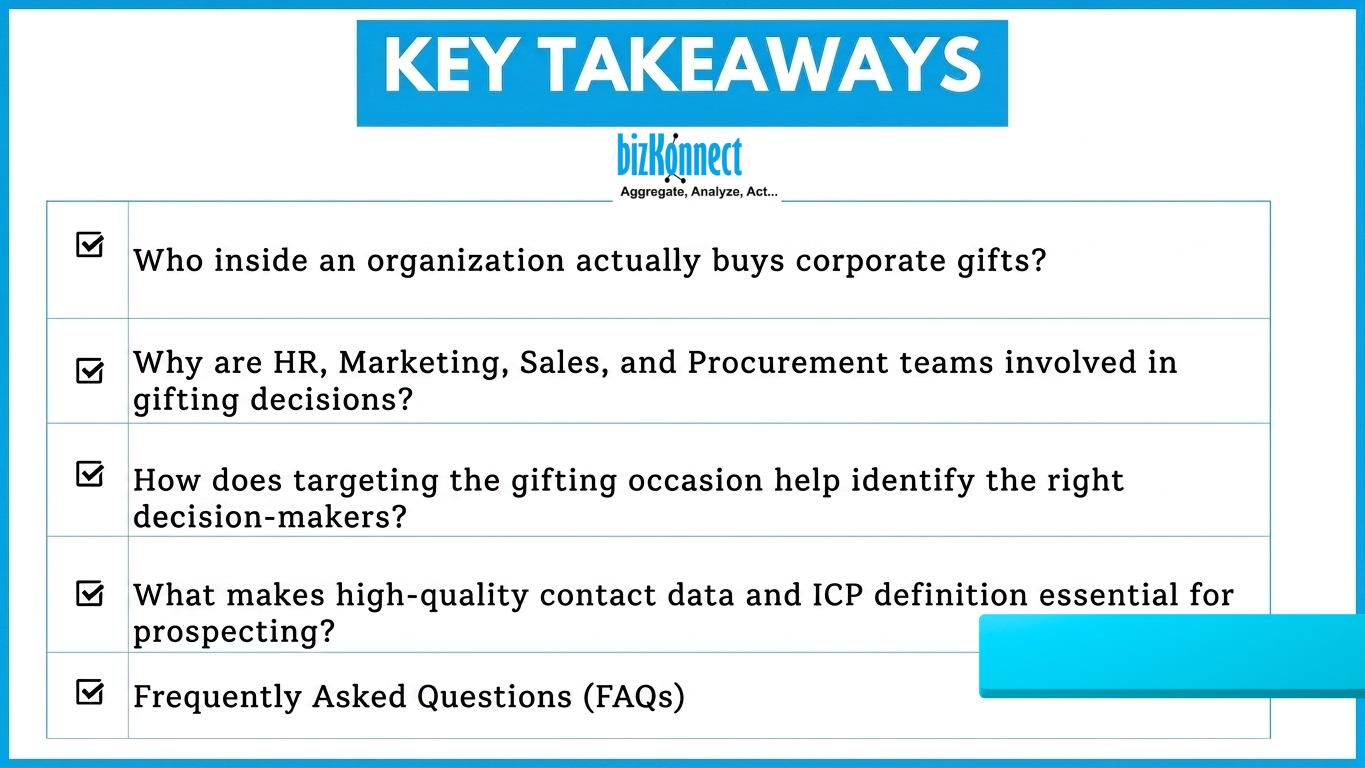
Frequently Asked Questions (FAQs)
Who usually buys corporate gifts?
Corporate gifts can be purchased or managed by HR, People Operations, Marketing, Sales, Customer Success, Events and Procurement. The relevant buyer depends on the purpose of the gifting program.
Is HR the main buyer of corporate gifting solutions?
HR is a major audience for employee recognition, onboarding and milestone gifting, but it is not the only buyer. Marketing, Sales, Customer Success and Procurement can also influence or manage corporate gifting programs.
What job titles should corporate gifting companies target?
Relevant titles include CHRO, Chief People Officer, Head of People, HR Director, Employee Experience Director, CMO, Marketing Director, Field Marketing Director, Sales Director, CRO, Customer Success Director and Procurement leaders.
Who decides on corporate gifting purchases?
The decision can involve several people. A department may define the requirement, an executive may approve the budget and Procurement may manage supplier selection.
What companies are good prospects for corporate gifting?
Companies with larger workforces, distributed teams, active sales organizations, frequent events, customer-facing teams or structured employee recognition programs can be relevant prospects. The strongest criteria depend on the gifting solution being offered.
When do companies buy corporate gifts?
Common occasions include employee onboarding, anniversaries, recognition programs, holidays, customer milestones, conferences, sales incentives, company events and partner appreciation.
How should a corporate gifting company define its ICP?
Start with the type of company most likely to have a recurring gifting need. Consider employee size, industry, geography, workforce structure, customer model and business events, then identify the functions and roles connected to the relevant gifting use case.
Should corporate gifting companies target multiple people at one account?
Yes. A corporate gifting purchase can involve a business owner, influencer, budget holder and procurement contact. Mapping several relevant stakeholders can give sales teams a clearer picture of the buying group.
What information is useful in a corporate gifting prospect list?
Useful fields include company name, website, industry, employee range, contact name, job title, job function, business email, company phone and professional profile information. These fields make it easier to segment accounts and identify relevant stakeholders.
For companies selling corporate gifting solutions in the U.S., having structured, current business and contact information can make that process considerably easier. It gives sales and marketing teams a practical starting point for building account lists, identifying relevant HR and business stakeholders, and creating outreach around a specific business need.
The strongest corporate gifting campaigns begin with a clear understanding of who is likely to buy, why they would buy, and when that need is most likely to arise.
Scale your corporate gifting sales outreach with direct access to pre-validated US HR leaders, talent directors, and chief people officers.
Explore Verified US HR Contact Packages. Starting at $19.
CLICK HERE to know more with BizKonnect.