


The end of 2025 marks a period of significant change within global technology enterprises. It’s not a routine reorganization; it’s a profound shift in how leadership and accountability are structured.
As GenAI systems gain operational autonomy, the entire corporate leadership framework is being redefined. This silent reorganization is creating powerful new executive positions such as the leader overseeing 'Agentic AI' systems and the ‘Chief AI Governance Officer,’ who now control major purchasing decisions. Sales and marketing teams relying on old IT company org charts are finding their familiar contacts no longer have spending authority.

To succeed as we transition into 2026, you must switch your focus from traditional managers to these new, empowered stakeholders using dynamic GenAI-driven tech company org charts. It reveals roles that did not exist even two years ago like Artificial Intelligence risk owners, agent orchestration leaders, and governance architects for efficient outreach.
What is causing the fundamental power shift within large IT organizations?
The corporate structure is changing because AI can now manage complex operations.
Gartner projects that by 2026, approximately 20% of middle management roles in global IT will be eliminated or completely transformed. This is driven by the deployment of AI to automate tasks that previously required management oversight, including resource management, data collection, and basic operational decisions.
Historically, sales teams targeted the Director of Applications or the VP of Infrastructure. Today, the purchasing power is consolidating into two distinct groups:
- Executive Sponsors: Senior C-suite or board-level leaders who champion the overall, strategic implementation of AI across the enterprise.
- AI-Augmented Specialists: Highly skilled experts who are empowered by GenAI tools to make immediate, high-impact decisions without needing approval from a managerial layer.
The entire sales and marketing org chart for IT companies must be redrawn to reflect this shift away from the traditional managerial structure.
Where exactly is the new center of influence in a modern enterprise org chart?
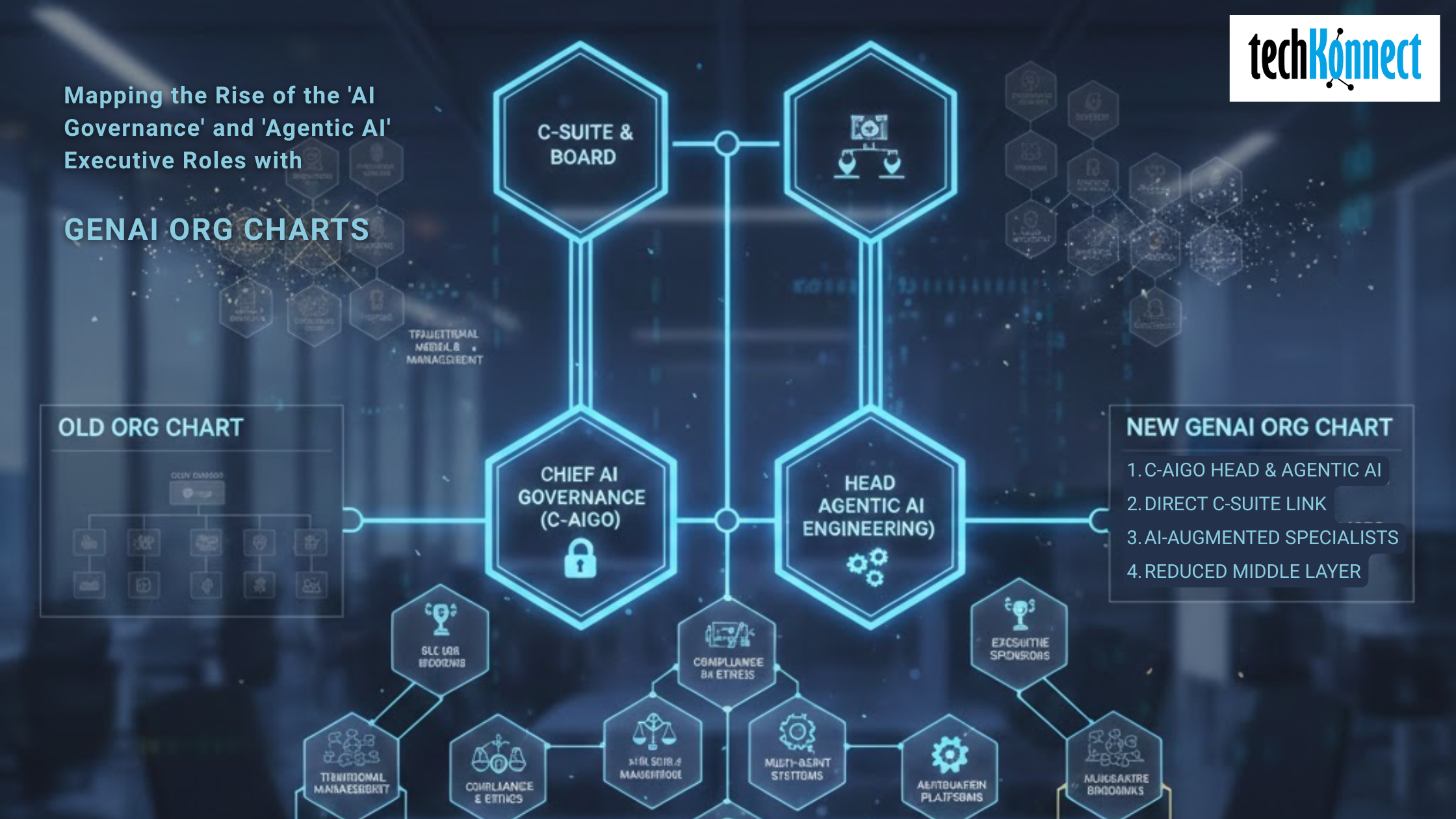
The new critical areas are operational risk, ethical standards, and autonomous execution. As IBM notes, the growth of "Agentic AI" necessitates a completely new operational model based on self-managing systems. This requires a dedicated focus on accountability, leading to the creation of new executive roles adjacent to the CIO (Chief Information Officer) and CISO (Chief Information Security Officer):
- The Head of Agentic AI Engineering: This individual is responsible for implementing multi-agent systems like AI units that work together to achieve business goals. They are the key buyer for specialized AI platforms and complex automation solutions.
- The Chief AI Governance Officer (C-AIGO): This person focuses on ensuring AI models are compliant, explainable, and ethical. They purchase tools for auditing, AI risk management, and regulatory adherence.
These important positions in a tech company organizational structure often report directly to the C-suite or a specific AI steering committee, moving outside the legacy IT reporting lines. Identifying them is the primary goal of modern B2B account mapping.
How can sales teams locate and engage these newly empowered decision-makers?
The key difference in navigating large enterprise tech company org charts is the scale and detail required. Successful sales prospecting in tech now requires moving beyond static directories to a dynamic view of the company's structure, i.e., the GenAI-driven tech company org charts.
This specialized solution help sales and marketing teams by offering:
- A Customized View: You can generate a tailored organizational chart that precisely matches your target profile, immediately revealing reporting lines and hierarchies.
- Contextual Account Mapping: You can access rich, contextual account maps of your desired companies. This insight shows which business units and individuals are crucial to your solution, which is essential for effective ABM (Account-Based Marketing) or lead generation.
- Actionable Intelligence: The system provides up-to-date contact information for key decision-makers, allowing you to quickly navigate the complex structure and connect with the right stakeholders at the right time.
This ensures your message which is focused on compliance, ethics, or operational efficiency reaches the C-AIGO or the Head of Agentic AI Engineering directly, bypassing the reducing layer of middle management. The most effective SaaS company org chart insights available today include a comprehensive tracking system for account management, giving you the clearest path to sales success as the new year approaches.
What is the immediate outcome of closing this AI-driven strategy gap?
Utilizing these advanced insights with GenAI-driven tech company org charts is a strategic necessity as it aligns your sales efforts with the C-suite’s top priorities for 2026. The benefits of this strategic pivot are immediate and measurable:
- Increased Pipeline Velocity: Target the Executive Sponsor directly to dramatically shorten the sales cycle.
- Hyper-Personalized Messaging: Contextual B2B account mapping ensures your messages resonate deeply with the precise concerns of the new executive roles.
- Maximized ROI on ABM: Focus resources only on accounts where the new, empowered buying committee has been successfully identified.
- Scalable Growth: Gain a repeatable, data-driven methodology for market penetration and accelerating sales success into the new year.
In short, the silent reorganization is already reshaping how technology companies operate, buy, and partner. Those who understand the new anatomy of tech company org charts will move faster, engage smarter, and stay relevant as the next cycle of 2026 begins.
Addressing some FAQs for your teams as they strategize for scalable growth:
Q1. What is the Agentic AI Operating Model and why should I care?
It refers to a new organizational structure where AI systems, or "agents," are empowered to execute complex, multi-step tasks autonomously. You should care because this model dictates a new buying center for specialized, high-autonomy software and system oversight tools.
Q2. Why are org charts important for sales prospecting in tech, specifically in 2026?
They are crucial because the traditional IT buying hierarchy is dissolving. Updated IT industry org chart data is the only way to bypass the shrinking middle management layer and identify the emerging Executive Sponsors and AI-specific executive roles.
Q3. Which departments are most likely to experience the impact of the vanishing middle management roles?
The most affected departments will be those with high levels of process-driven work, such as IT operations, procurement, and data management, where GenAI and specialized automation tools can easily take over coordination and supervisory tasks.
Find the right door-opener faster within tech enterprises. CLICK HERE to see how GenAI-powered actionable org maps do it with BizKonnect.