Cigna
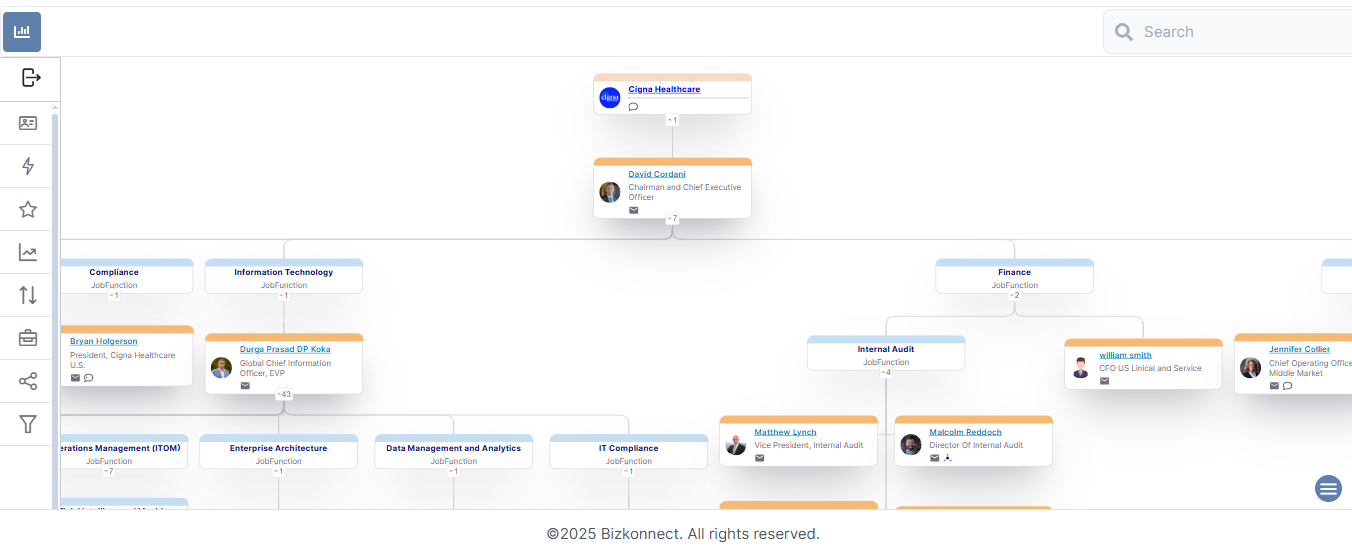
Cigna Organizational Chart - Cigna is structured around two primary platforms: Evernorth Health Services and Cigna Healthcare. Evernorth oversees pharmacy benefits and care services, while Cigna Healthcare manages medical, dental, behavioral, and international insurance. Centralized teams handle clinical governance, compliance, finance, and technology to meet regulatory demands across markets. In fiscal year 2024, Cigna reported revenue of about US $195 billion and net income of roughly US $5.3 billion.
Company Overview - Cigna is a global health services company serving employers, individuals, and government-sponsored programs. The company provides medical coverage, pharmacy benefits, care coordination, and related health services. Through its integrated model, Cigna combines insurance capabilities with health services to manage cost, quality, and access to care. Its operations span the United States and international markets, working with healthcare providers, employers, and public-sector organizations.
FAQs -
1. What is the Cigna Org Chart?
It navigates how Cigna organizes leadership around distinct health services and insurance platforms, with shared oversight for clinical standards, compliance, and enterprise operations.
2. How often does Cigna update its organizational structure?
Structural changes of Cigna usually follow regulatory shifts, acquisitions, or changes in care delivery strategy.
3. Why is the Org Chart relevant to suppliers and partners?
It helps partners understand whether engagement sits within insurance operations, pharmacy services, or care management platforms, each with different approval paths.
4. Which departments are most important for vendors?
Health services operations, pharmacy benefit management, clinical programs, data and analytics, and compliance-driven procurement teams are key areas for vendors.
5. How can marketers use Cigna’s Org Chart effectively?
Marketers can align outreach with priorities such as cost containment, care quality, member experience, or regulatory performance by identifying platform-specific leadership and functional owners.
1. What is the Cigna Org Chart?
It navigates how Cigna organizes leadership around distinct health services and insurance platforms, with shared oversight for clinical standards, compliance, and enterprise operations.
2. How often does Cigna update its organizational structure?
Structural changes of Cigna usually follow regulatory shifts, acquisitions, or changes in care delivery strategy.
3. Why is the Org Chart relevant to suppliers and partners?
It helps partners understand whether engagement sits within insurance operations, pharmacy services, or care management platforms, each with different approval paths.
4. Which departments are most important for vendors?
Health services operations, pharmacy benefit management, clinical programs, data and analytics, and compliance-driven procurement teams are key areas for vendors.
5. How can marketers use Cigna’s Org Chart effectively?
Marketers can align outreach with priorities such as cost containment, care quality, member experience, or regulatory performance by identifying platform-specific leadership and functional owners.