Citigroup
Citigroup Organization Chart - Citigroup's organizational structure connects executive leadership to five primary business segments: Services, Markets, Banking, U.S. Personal Banking, and Wealth. The firm reported revenue of $85.2 billion in 2025 and net income of $14.3 billion, serving clients across more than 160 countries through a globally integrated banking model.
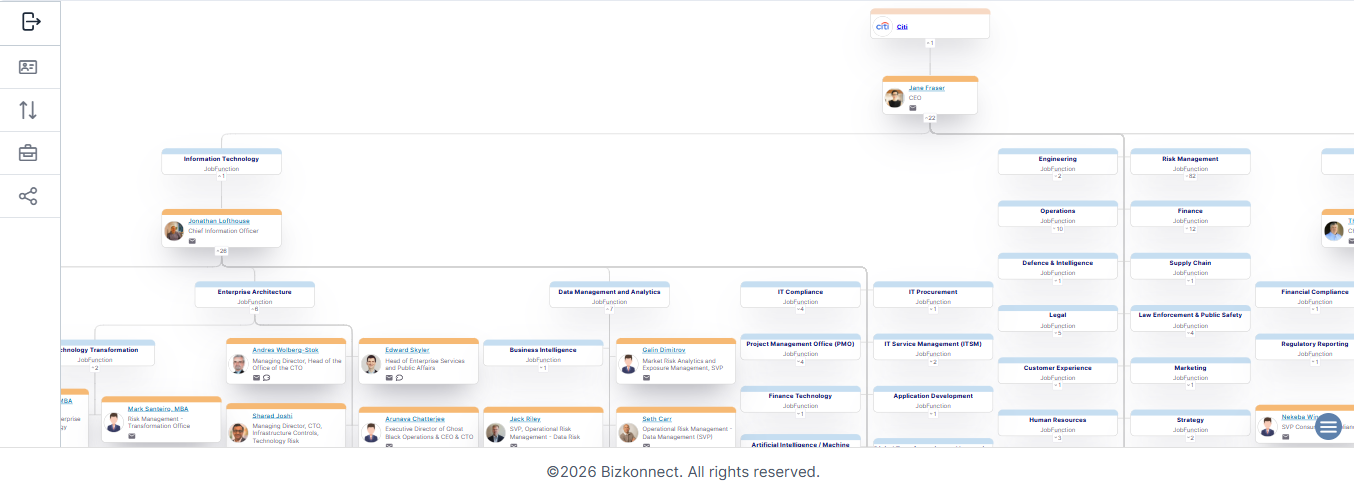
Company Overview - Citigroup is a leading global financial institution headquartered in New York City, operating one of the world's most extensive banking networks. Its business spans institutional banking services covering treasury, trade, securities services, and markets; investment banking and capital markets; U.S. consumer and wealth management; and international retail operations. Citi serves corporations, governments, institutional investors, and retail clients, with particular strength in cross-border transactions, foreign exchange, custody, and emerging market financing.
Frequently Asked Questions
Q: What is the Citigroup Org Chart?
Citigroup organizes around five segments: Services (treasury and trade solutions, securities services), Markets, Banking (investment banking), U.S. Personal Banking, and Wealth, each reporting to a dedicated CEO.
Q: How often does the Citigroup Org Chart get updated?
Citi has undergone significant restructuring since 2023 under its Transformation initiative, simplifying layers and consolidating reporting lines. Major structural updates are expected to continue through the reorganization phase.
Q: Why is the Org Chart of Citigroup important for B2B outreach?
Vendors targeting treasury technology, capital markets infrastructure, or retail banking platforms must navigate distinct segment leadership teams rather than relying on centralized procurement alone.
Q: Which functions are most critical in the Citigroup Org Chart for vendors?
Treasury and trade solutions, markets technology, risk and compliance operations, enterprise data management, wealth advisory platforms, and global procurement are high-priority engagement areas.
Q: How can marketers use the Citigroup Org Chart effectively?
Pitching cross-border payment solutions to the Services segment versus trading analytics to Markets versus wealth planning platforms to the Wealth division enables vendors to align messaging with each segment's operating priorities and client mandates.
Q: What is the Citigroup Org Chart?
Citigroup organizes around five segments: Services (treasury and trade solutions, securities services), Markets, Banking (investment banking), U.S. Personal Banking, and Wealth, each reporting to a dedicated CEO.
Q: How often does the Citigroup Org Chart get updated?
Citi has undergone significant restructuring since 2023 under its Transformation initiative, simplifying layers and consolidating reporting lines. Major structural updates are expected to continue through the reorganization phase.
Q: Why is the Org Chart of Citigroup important for B2B outreach?
Vendors targeting treasury technology, capital markets infrastructure, or retail banking platforms must navigate distinct segment leadership teams rather than relying on centralized procurement alone.
Q: Which functions are most critical in the Citigroup Org Chart for vendors?
Treasury and trade solutions, markets technology, risk and compliance operations, enterprise data management, wealth advisory platforms, and global procurement are high-priority engagement areas.
Q: How can marketers use the Citigroup Org Chart effectively?
Pitching cross-border payment solutions to the Services segment versus trading analytics to Markets versus wealth planning platforms to the Wealth division enables vendors to align messaging with each segment's operating priorities and client mandates.