Costco
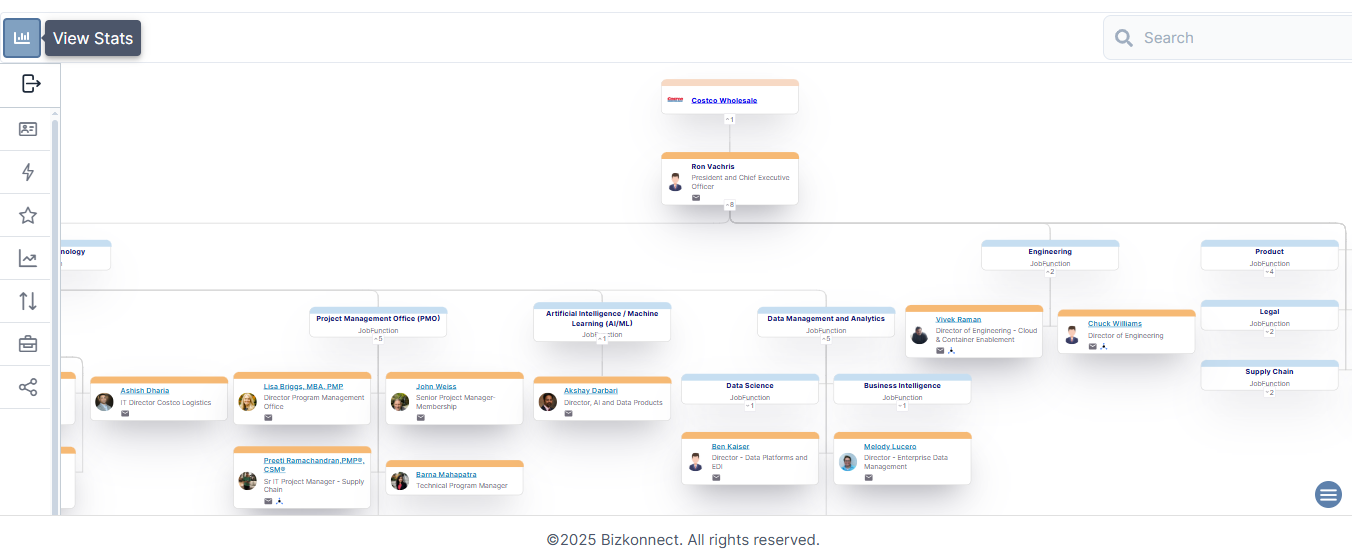
Costco Organizational Chart - Costco’s leadership oversight flows from the executive team to core functions covering merchandising, global operations, supply chain, finance, and membership services. In fiscal year 2024, Costco reported revenue of approximately US $249.6 billion and net income of about US $7.4 billion, reflecting the efficiency of this centralized yet regionally executed structure.
Company Overview - Costco operates a membership-based warehouse club model focused on high-volume sales, limited product selection, and low operating margins. Founded in 1983, the company serves consumers and small businesses through physical warehouses and a growing e-commerce presence. Its business model emphasizes private-label products under the Kirkland Signature brand, long-term supplier relationships, and disciplined cost management. Costco operates warehouses across North America, Europe, and the Asia-Pacific region, supported by integrated logistics and distribution networks.
FAQs -
1. What is the Costco Org Chart?
It shows how executive leadership oversees centralized merchandising and corporate functions while regional and warehouse management handle day-to-day operations and local performance.
2. How often does Costco update its organizational structure?
Changes are typically incremental, tied to geographic expansion, leadership succession, or operational scale rather than frequent reorganizations.
3. Why is the Org Chart relevant to suppliers and partners?
It clarifies decision authority within merchandising and procurement teams, helping partners understand where buying decisions and contract negotiations are managed.
4. Which departments are most important for vendors?
Merchandising, supply chain and logistics, quality assurance, and private-label development are central for product and service vendors.
5. How can marketers use Costco’s Org Chart effectively?
Marketers can align proposals with category needs, pricing discipline, and operational priorities rather than broad brand messaging by identifying the right merchandising and regional stakeholders.
1. What is the Costco Org Chart?
It shows how executive leadership oversees centralized merchandising and corporate functions while regional and warehouse management handle day-to-day operations and local performance.
2. How often does Costco update its organizational structure?
Changes are typically incremental, tied to geographic expansion, leadership succession, or operational scale rather than frequent reorganizations.
3. Why is the Org Chart relevant to suppliers and partners?
It clarifies decision authority within merchandising and procurement teams, helping partners understand where buying decisions and contract negotiations are managed.
4. Which departments are most important for vendors?
Merchandising, supply chain and logistics, quality assurance, and private-label development are central for product and service vendors.
5. How can marketers use Costco’s Org Chart effectively?
Marketers can align proposals with category needs, pricing discipline, and operational priorities rather than broad brand messaging by identifying the right merchandising and regional stakeholders.