HSBC
HSBC Organization Chart - HSBC Holdings operates through four global businesses: Wealth and Personal Banking, Commercial Banking, Global Banking and Markets, and Global Private Banking, with a geographic focus on Asia and the Middle East. The bank reported revenue of $68.3 billion in 2025 and pre-tax profit of $29.9 billion, serving over 40 million customers across more than 60 countries.
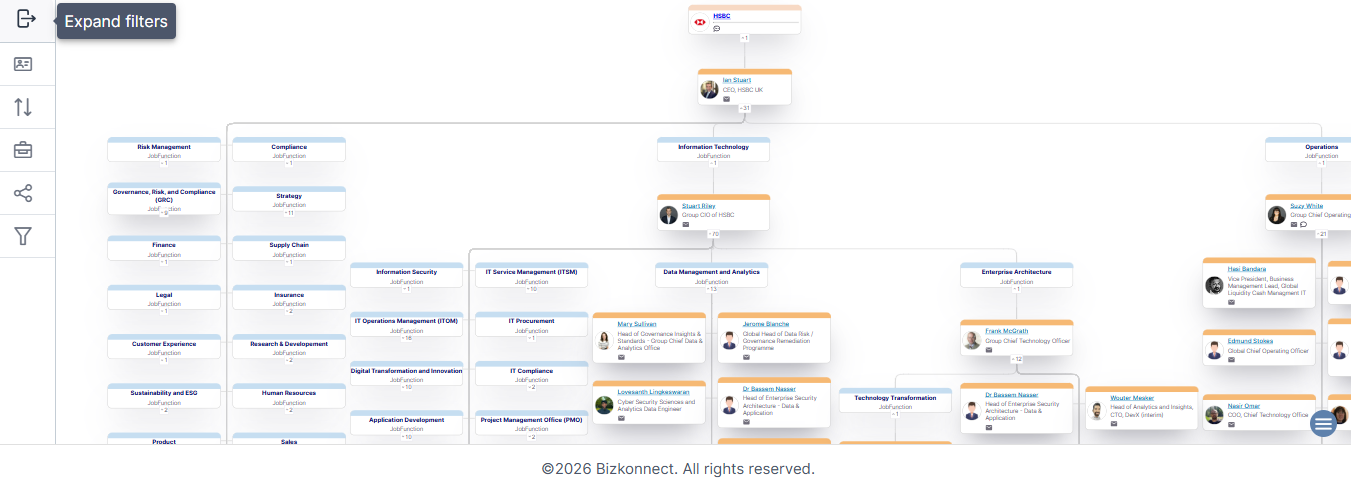
Company Overview - HSBC Holdings is one of the world's largest banking and financial services organizations, headquartered in London with its primary strategic focus on Asia and the Middle East. Its operations span retail banking, wealth management, and mortgages for personal customers; trade finance, working capital, and transactional banking for commercial clients; capital markets, custody, and investment banking for institutions; and private banking for high-net-worth individuals. Following its 2023 acquisition of Silicon Valley Bank UK and recent strategic simplification, HSBC continues to invest in Asia-led growth, digital banking, and sustainable finance.
FAQs -
Q: What is the HSBC Org Chart?
HSBC structures around Wealth and Personal Banking, Commercial Banking, Global Banking and Markets, and Global Private Banking, each operating as global businesses supported by technology, risk, compliance, finance, and country-level management.
Q: How often is the HSBC Org Chart updated?
HSBC has undergone multiple strategic restructurings since 2020, including geographic simplification and business unit consolidations. Further changes have continued following leadership transitions and Asia-pivot strategy adjustments.
Q: Why does the HSBC Org Chart matter for B2B outreach?
Transaction banking technology vendors, capital markets platforms, regulatory compliance solution providers, and wealth management fintechs must target the correct global business rather than a centralized banking function.
Q: Which HSBC functions should vendors prioritize?
Global Banking and Markets technology, Commercial Banking trade and transaction services, wealth management digital platforms, global procurement, risk and compliance technology, and HSBC Innovation Banking are high-priority vendor engagement areas.
Q: How can marketers use the HSBC Org Chart effectively?
Trade finance automation vendors engaging Commercial Banking operations differ from custody and securities services providers working with Global Banking and Markets versus sustainable finance advisors approaching HSBC's ESG and green bond issuance teams in its capital markets division.
Q: What is the HSBC Org Chart?
HSBC structures around Wealth and Personal Banking, Commercial Banking, Global Banking and Markets, and Global Private Banking, each operating as global businesses supported by technology, risk, compliance, finance, and country-level management.
Q: How often is the HSBC Org Chart updated?
HSBC has undergone multiple strategic restructurings since 2020, including geographic simplification and business unit consolidations. Further changes have continued following leadership transitions and Asia-pivot strategy adjustments.
Q: Why does the HSBC Org Chart matter for B2B outreach?
Transaction banking technology vendors, capital markets platforms, regulatory compliance solution providers, and wealth management fintechs must target the correct global business rather than a centralized banking function.
Q: Which HSBC functions should vendors prioritize?
Global Banking and Markets technology, Commercial Banking trade and transaction services, wealth management digital platforms, global procurement, risk and compliance technology, and HSBC Innovation Banking are high-priority vendor engagement areas.
Q: How can marketers use the HSBC Org Chart effectively?
Trade finance automation vendors engaging Commercial Banking operations differ from custody and securities services providers working with Global Banking and Markets versus sustainable finance advisors approaching HSBC's ESG and green bond issuance teams in its capital markets division.