Morgan stanly
Morgan Stanley Organization Chart - Morgan Stanley’s organizational structure is connecting executive leadership to business divisions spanning institutional securities, wealth management, and investment management. It reported revenue of $54.8 billion in 2023, with net income of $9.1 billion, serving corporations, governments, institutions, and individuals through offices in more than 41 countries worldwide.
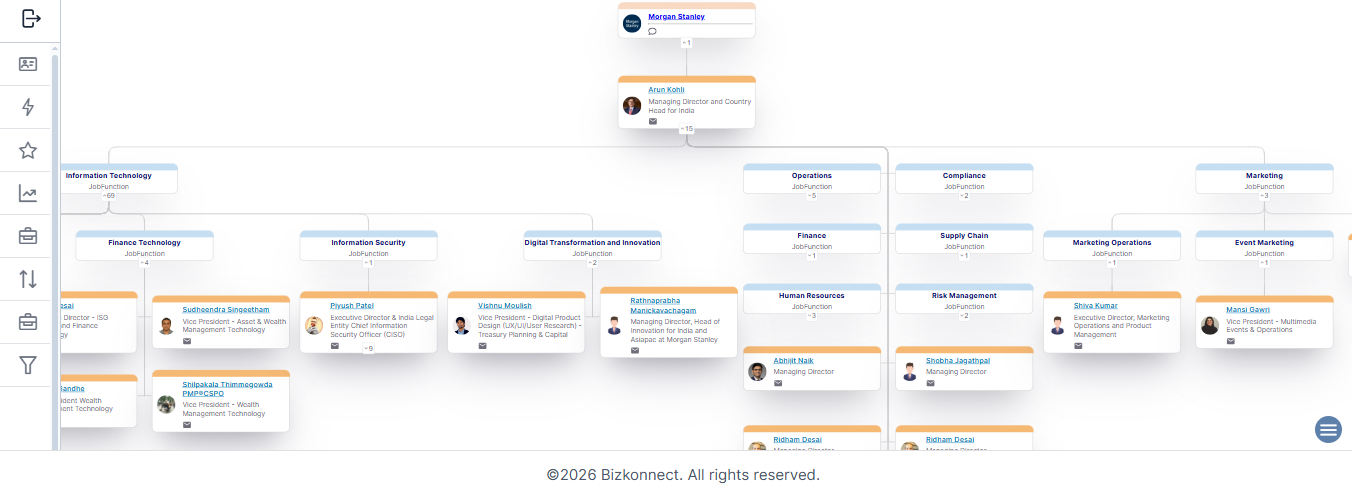
Company Overview - Morgan Stanley is a leading investment bank and wealth management firm. Its operations include institutional securities, wealth management, and investment management delivering asset management and private equity solutions. The company provides mergers and acquisitions advisory, underwriting, sales and trading, prime brokerage, and portfolio management services while investing in digital wealth platforms, algorithmic trading technology, and risk management infrastructure.
FAQs -
1. What is the Morgan Stanley Org Chart?
The structure divides into Institutional Securities (investment banking and trading), Wealth Management, and Investment Management, each with distinct leadership and client service teams.
2. How often does the Morgan Stanley Org Chart get updated?
Updates typically coincide with strategic initiatives, acquisitions like E*TRADE integration, or senior leadership transitions.
3. Why is the Org Chart of Morgan Stanley important for B2B outreach?
Financial technology vendors must differentiate between institutional trading infrastructure needs versus wealth advisor platforms or asset management tools.
4. Which functions are most relevant in the Morgan Stanley Org Chart for vendors?
Trading technology, wealth management platforms, risk analytics, investment research systems, and client portal development are key focus areas.
5. How can marketers use the Morgan Stanley Org Chart effectively?
Targeting institutional securities with low-latency trading solutions versus wealth management with client engagement tools ensures alignment with each division's technology priorities and budget cycles.