Nestle
Nestlé Organization Chart - Nestlé USA is the world's largest food and beverage company with a comprehensive organizational structure which shows divisions spanning nutrition, health and wellness, beverages, prepared foods, confectionery, and pet care. The company reported global revenue of CHF 93 billion in 2023, operating in 188 countries with iconic brands serving billions of consumers daily.
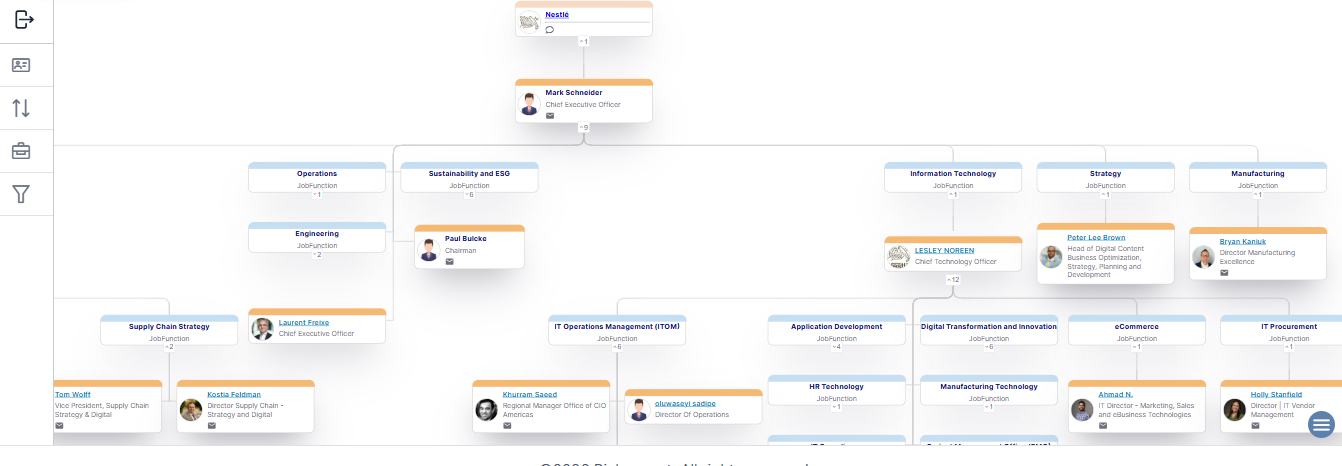
Company Overview - Nestlé’s portfolio includes coffee brands like Nescafé and Starbucks products, bottled water including Perrier and S.Pellegrino, infant nutrition with Gerber, pet care through Purina, confectionery such as KitKat and Butterfinger, frozen foods like Stouffer's and DiGiorno, and healthcare nutrition products. The company operates through category-based business units managing brand strategy and innovation, supported by global operations covering supply chain, R&D, and manufacturing while investing in plant-based alternatives, sustainable packaging, regenerative agriculture, and personalized nutrition solutions.
FAQs -
1. What is the Nestlé Org Chart?
Nestlé structures its product categories (Coffee, Water, Nutrition, Pet Care, Confectionery) with regional market organizations and centralized functions like R&D, supply chain, and marketing services.
2. How often does the Nestlé Org Chart get updated?
Changes typically occur with portfolio optimization, brand acquisitions or divestitures, and regional leadership rotations, usually annually.
3. Why is the Org Chart of Nestlé important for B2B outreach?
Ingredient suppliers, packaging vendors, and food technology providers must target specific category teams rather than approaching Nestlé as a monolithic entity.
4. Which functions are most relevant in the Nestlé Org Chart for vendors?
Category procurement, R&D and innovation centers, manufacturing and operations, supply chain logistics, and sustainability teams are key stakeholder groups.
5. How can marketers use the Nestlé Org Chart effectively?
plant-based protein solutions to the nutrition division versus sustainable packaging to pet care versus automation technology to manufacturing ensures category-relevant conversations with empowered buyers.
1. What is the Nestlé Org Chart?
Nestlé structures its product categories (Coffee, Water, Nutrition, Pet Care, Confectionery) with regional market organizations and centralized functions like R&D, supply chain, and marketing services.
2. How often does the Nestlé Org Chart get updated?
Changes typically occur with portfolio optimization, brand acquisitions or divestitures, and regional leadership rotations, usually annually.
3. Why is the Org Chart of Nestlé important for B2B outreach?
Ingredient suppliers, packaging vendors, and food technology providers must target specific category teams rather than approaching Nestlé as a monolithic entity.
4. Which functions are most relevant in the Nestlé Org Chart for vendors?
Category procurement, R&D and innovation centers, manufacturing and operations, supply chain logistics, and sustainability teams are key stakeholder groups.
5. How can marketers use the Nestlé Org Chart effectively?
plant-based protein solutions to the nutrition division versus sustainable packaging to pet care versus automation technology to manufacturing ensures category-relevant conversations with empowered buyers.