Nike
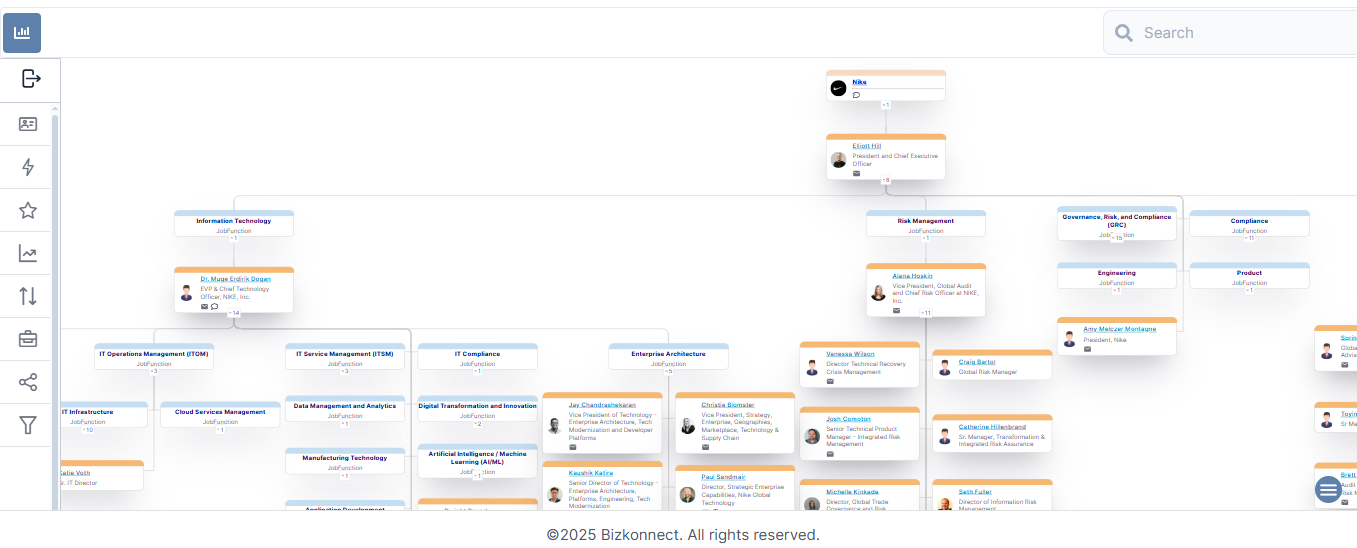
Nike Organizational Chart - The company’s executive leadership oversees global functions such as product creation, brand marketing, supply chain, and digital commerce.However, the category teams focus on footwear, apparel, and equipment across sports and lifestyle segments. This structure supports consistent brand direction alongside regional market responsiveness. In fiscal year 2024, Nike reported revenue of approximately US $51.4 billion and net income of about US $5.7 billion.
Company Description - Founded in 1964, Nike is a global sportswear company known for athletic footwear, apparel, and equipment. The company serves professional athletes and consumers through a mix of wholesale partners, owned retail stores, and direct-to-consumer digital channels. Nike’s business is driven by product innovation, brand storytelling, and supply chain scale, with a growing emphasis on digital platforms and membership-based engagement.
FAQs -
1. What is the Nike Org Chart?
It offers a comprehensive view of how Nike organizes leadership across global brand functions, product categories, and regional markets to balance centralized brand control with local execution.
2. How often does Nike update its organizational structure?
Nike’s structural changes typically follow shifts in consumer strategy, digital investment, or regional performance, rather than frequent company-wide reorganizations.
3. Why is the Org Chart relevant to suppliers and partners?
It helps partners understand where decisions are made across product creation, sourcing, and regional distribution, improving coordination and accountability.
4. Which departments are most important for vendors?
The key areas for vendors supporting Nike’s business are product creation, sourcing and manufacturing, supply chain operations, and global merchandising.
5. How can marketers use Nike’s Org Chart effectively?
By navigating category leaders and regional decision-makers, marketers can align proposals with specific sport segments, consumer markets, and growth priorities.