Oracle
Oracle Organizational Chart - Oracle USA is a global enterprise technology leader with a comprehensive organizational structure connecting executive leadership to operational divisions spanning cloud infrastructure, enterprise applications, database systems, and industry-specific solutions. The company reported revenue of $52.96 billion in fiscal year 2024, with net income of $10.9 billion, serving hundreds of thousands of customers worldwide.
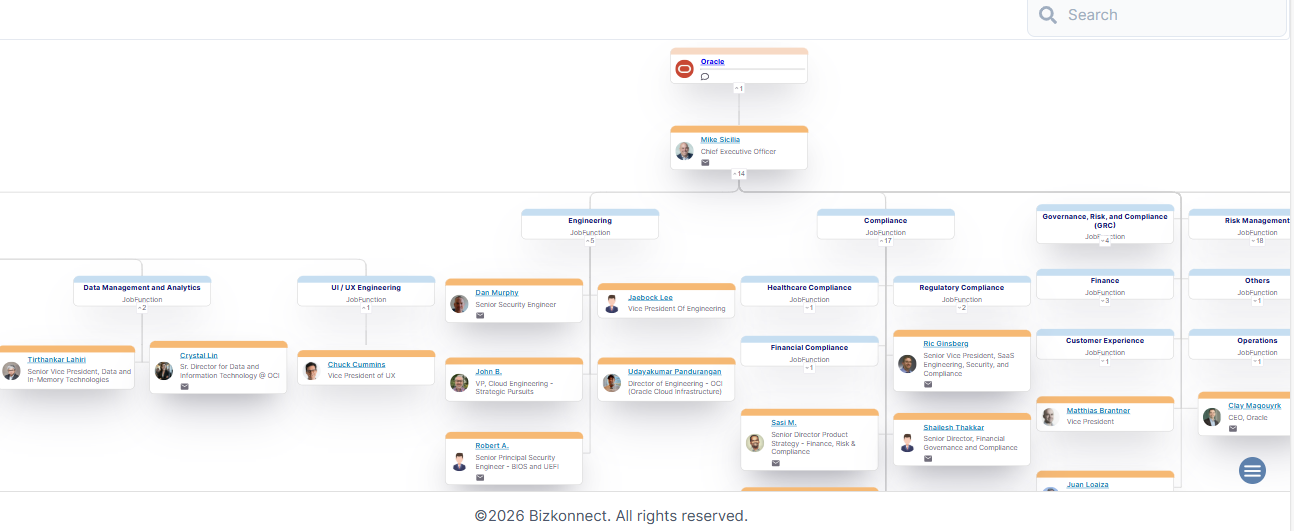
Company Overview - Oracle USA, headquartered in Austin, Texas, is one of the world's leading providers of enterprise cloud computing and database technology. Its operations encompass Oracle Cloud Infrastructure (OCI), Oracle Fusion Cloud Applications including ERP and HCM suites, Oracle Database and MySQL, industry-specific cloud solutions, and NetSuite business management platform. The company serves enterprises, government agencies, and small businesses globally while investing in autonomous database technologies, AI capabilities, and vertical SaaS solutions tailored to specific industries.
FAQs -
1. What is the Oracle Org Chart?
Oracle's structure includes Cloud Infrastructure, Cloud Applications, Database divisions, industry verticals, plus sales and consulting arms that support enterprise deployments.
2. How often does the Oracle Org Chart get updated?
Oracle reorganizes around product launches and acquisitions, so changes occur several times per year.
3. Why is the Org Chart of Oracle important for B2B outreach?
Cloud vendors and integrators need clarity on whether to engage with OCI teams, Fusion Apps product managers, or industry-specific solution architects.
4. Which functions are most relevant in the Oracle Org Chart for vendors?
Cloud operations, app development, partner alliances, professional services, and vertical solution teams (healthcare, finance, etc.) are key contacts.
5. How can marketers use the Oracle Org Chart effectively?
Knowing if a prospect manages database licensing versus cloud migrations allows for targeted case studies like autonomous DB benefits versus multi-cloud strategies.