Salesforce
Salesforce Organization Chart - The organizational structure of Salesforce connects executive leadership to operational divisions spanning customer relationship management, marketing automation, commerce solutions, analytics, and industry-specific cloud applications. The company reported revenue of $34.9 billion in fiscal year 2024, with operating margin improvement initiatives, serving over 150,000 customers worldwide across every industry.
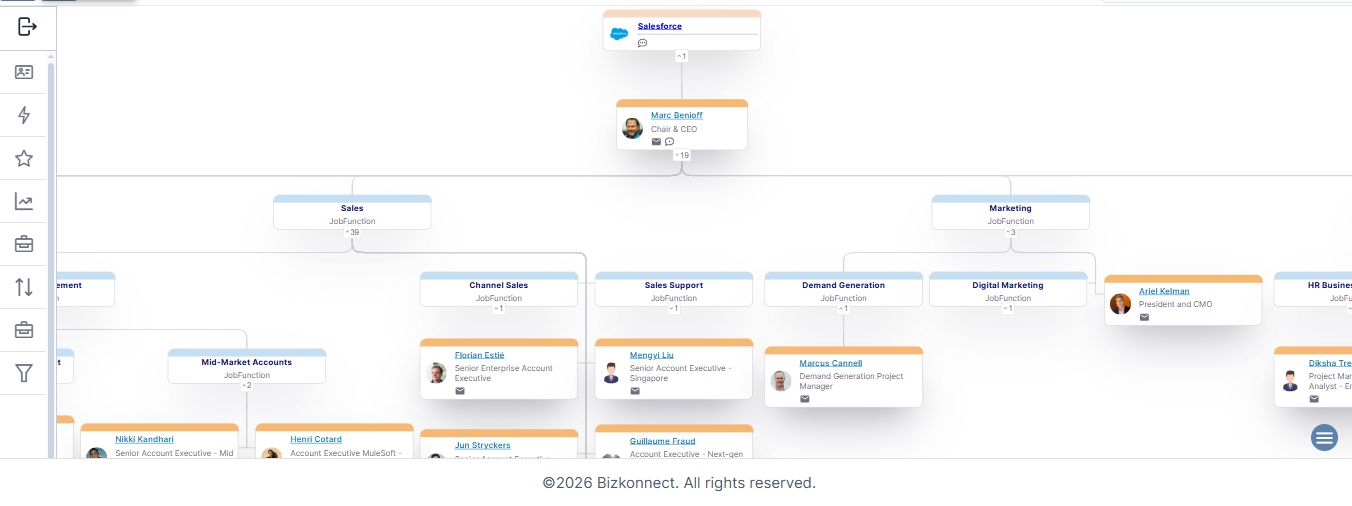
Company Overview - Salesforce is the world's leading customer relationship management (CRM) platform and enterprise cloud software provider. Its operations encompass Sales Cloud, Service Cloud, Marketing Cloud, Commerce Cloud, Tableau analytics, MuleSoft integration platform, Slack collaboration tools, and vertical solutions for industries including financial services, healthcare, manufacturing, and retail. The company delivers integrated cloud applications enabling sales automation, customer service, marketing campaigns, e-commerce, data visualization, and workflow automation.
FAQs -
1. What is the Salesforce Org Chart?
Salesforce structures around cloud products (Sales, Service, Marketing, Commerce), plus platform teams (Tableau, MuleSoft, Slack), industry verticals, and shared services like engineering and customer success.
2. How often does the Salesforce Org Chart get updated?
Major acquisitions and product integrations drive restructuring, with updates occurring several times annually.
3. Why is the Org Chart of Salesforce important for B2B outreach?
ISV partners and consultancies need to identify whether to engage product teams, industry solution architects, or AppExchange partnership managers.
4. Which functions are most relevant in the Salesforce Org Chart for vendors?
Product engineering, industry cloud solutions, partner ecosystem and alliances, customer success, and platform integration teams are critical touchpoints.
5. How can marketers use the Salesforce Org Chart effectively?
Knowing if a prospect leads financial services cloud versus managed Service Cloud AI features allows vendors to position specialized integrations or vertical expertise rather than generic CRM pitches.