SAP
SAP Organization Chart - SAP is a global enterprise software leader with a comprehensive organizational structure connecting executive leadership to operational divisions spanning enterprise resource planning, business applications, cloud infrastructure, analytics, and industry-specific solutions. The company reported revenue of €31.2 billion in 2023, serving more than 440,000 customers across over 180 countries with integrated business
management software.
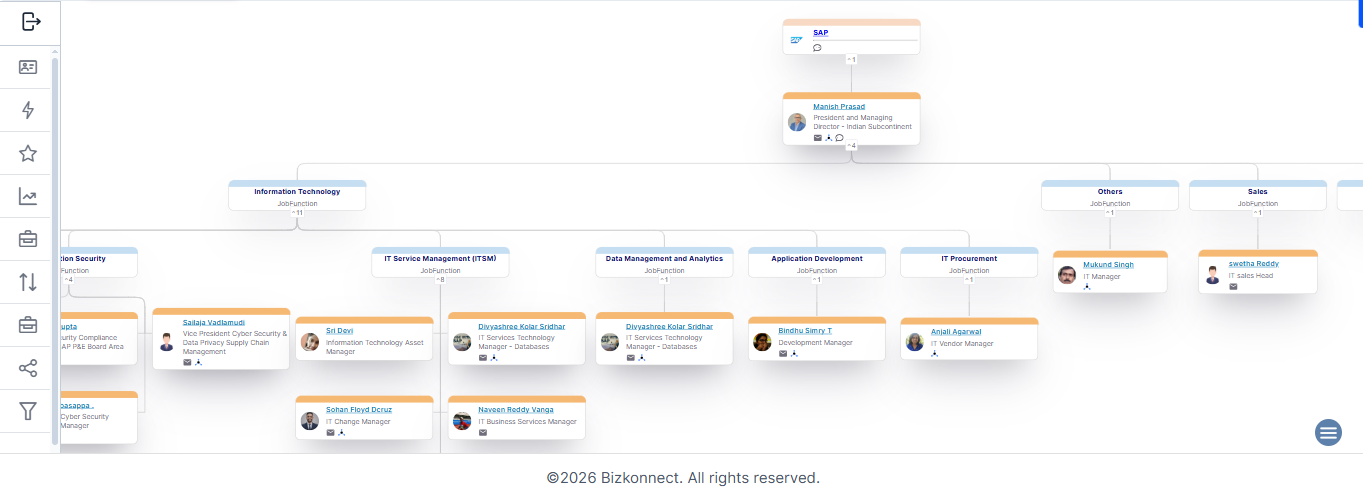
Company Overview - SAP, headquartered in Walldorf, Germany with major U.S. operations in Newtown Square, Pennsylvania, is the world's leading provider of enterprise application software. Its operations encompass SAP S/4HANA ERP platform, SuccessFactors human capital management, Ariba procurement and supply chain, SAP Customer Experience (CX) suite, SAP Analytics Cloud, Business Technology Platform (BTP), and industry cloud solutions for manufacturing, retail, utilities, and public sector. The company delivers integrated business processes spanning finance, HR, supply chain, customer engagement, and operations.
FAQs -
1. What is the SAP Org Chart?
SAP organizes around product lines (S/4HANA, SuccessFactors, Ariba, CX), cloud infrastructure, industry solutions, plus global services covering consulting, support, and customer success.
2. How often does the SAP Org Chart get updated?
Restructuring occurs with product strategy shifts or cloud transition milestones, typically annually or semi-annually.
3. Why is the Org Chart of SAP important for B2B outreach?
Implementation partners and technology vendors need to identify whether to engage ERP teams, HCM product managers, or industry-specific solution architects.
4. Which functions are most relevant in the SAP Org Chart for vendors?
Product development, cloud operations, partner ecosystem management, industry solution teams, and professional services are primary stakeholder groups.
5. How can marketers use the SAP Org Chart effectively?
Distinguishing between S/4HANA migration teams versus SuccessFactors HR leaders allows vendors to offer migration tools versus talent analytics, matching solutions to specific transformation initiatives.