Target
Target Corporation Organization Chart - Target Corporation operates as a single-segment retailer organized around merchandising categories, store operations, supply chain, and digital commerce, all under a unified leadership structure. The company reported revenue of $104.8 billion in fiscal 2025 with net income of $5.1 billion, operating over 1,950 stores across the United States alongside a fast-growing digital and same-day fulfillment business.
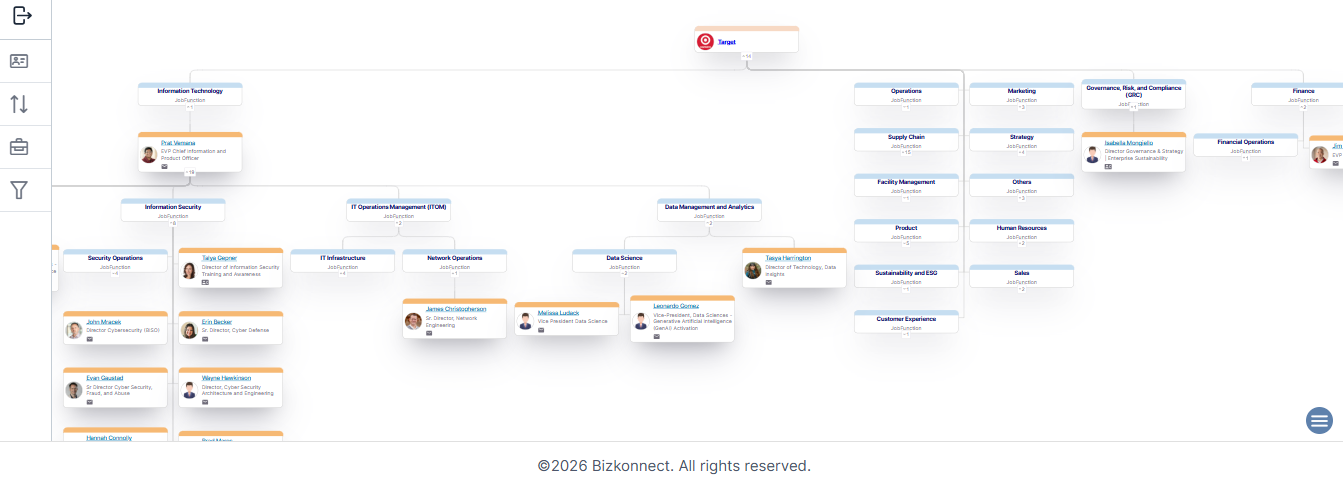
Company Overview - Target Corporation is a major U.S. general merchandise retailer headquartered in Minneapolis, Minnesota, offering a curated assortment of apparel, home goods, electronics, grocery, beauty, and essentials. Target differentiates through proprietary owned brands, store-within-a-store partnerships with brands like Apple and Ulta Beauty, and same-day delivery through Shipt. Its stores serve as fulfillment hubs for buy-online-pickup-in-store and drive-up services. Target invests in store remodels, supply chain modernization, and roundel, its retail media network that connects brands with Target's audience.
Frequently Asked Questions
Q: What is the Target Org Chart?
Target organizes around Merchandising (category-based buying teams), Store Operations, Digital and Fulfillment, Supply Chain, and Enterprise functions including Finance, HR, Legal, and Roundel retail media.
Q: How often is the Target Org Chart updated?
Structural changes typically follow shifts in strategic priorities, such as supply chain investment cycles, owned-brand launches, or digital commerce expansions, occurring annually or following major performance reviews.
Q: Why is the Target Org Chart important for suppliers and vendors?
Consumer goods brands, supply chain technology vendors, and retail media agencies must identify whether to engage category buyers in Merchandising, supply chain operations, digital commerce teams, or the Roundel media network independently.
Q: Which Target functions are most relevant for brand and technology vendors?
Category merchandising and buying, Roundel retail media, digital and e-commerce product management, supply chain and logistics technology, store operations, and owned brand development are key engagement areas.
Q: How can marketers use the Target Org Chart effectively?
Consumer packaged goods brands pitching promotional activations to Roundel's media team differ from supply chain SaaS vendors engaging logistics engineering versus product packaging vendors working with category-specific Merchandising buyers, each group operates with distinct goals and vendor qualification criteria.