


When Google's finance org structure shifts, B2B vendors pay the price, unless they're watching.
A deal that took eight months to build can unravel in eight days after a key executive exits. Most B2B vendors selling into large tech companies like Google discover this the hard way, i.e., when a replacement contact shows no memory of previous conversations, has different priorities, and effectively restarts the buying process from scratch.
That is the real impact of leadership change on B2B sales.
Understanding how the Google org chart shifts including who leaves, who takes over, and what that means for active and prospective deals when backed by GenAI is now a core part of go-to-market execution.
How Often Do Big Tech Org Structures Actually Change and What Triggers Them?
More often than most vendors track.
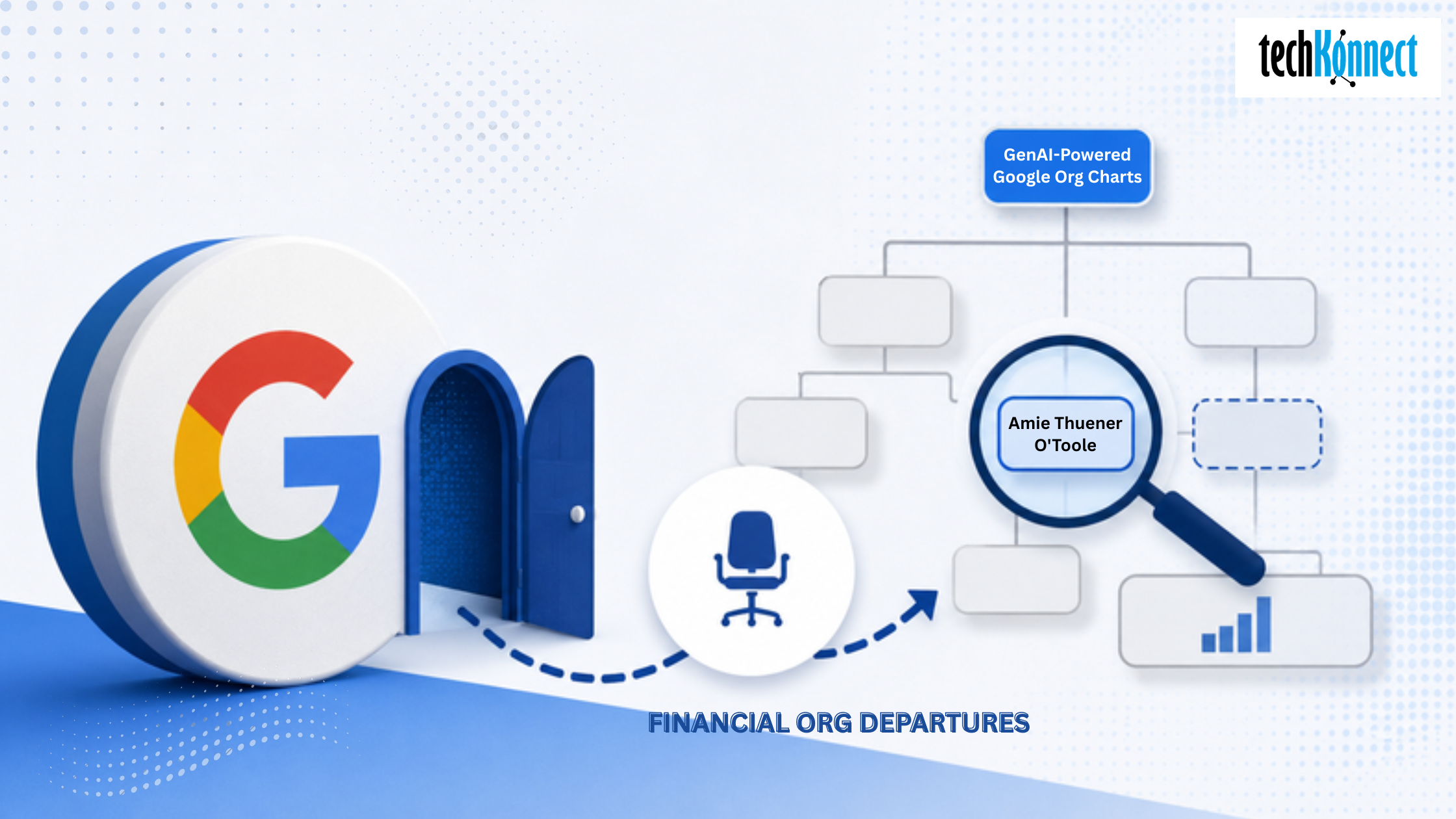
At a company like Alphabet, which employs over 180,000 people across its entities, senior-level changes happen continuously across functions. Most never make headlines but the ones that do, like the April 2026 resignation of Amie Thuener O'Toole, Alphabet's Vice President, Corporate Controller and Principal Accounting Officer reveal something useful when read carefully.
Per Alphabet's Form 8-K filed with the SEC (Item 5.02), O'Toole notified the company of her resignation on March 30, 2026, with an effective date of April 9, 2026, a 10-day window between notice and exit. The filing explicitly states that the departure was to pursue another professional opportunity and was not the result of any disagreement over operations, policies, or practices.
That language matters.
A "routine" exit still resets the organizational dynamic around that role. Someone new will inherit her responsibilities such as financial reporting oversight, internal controls, relationships with external vendors in the finance and compliance tech stack. Their priorities may differ but their incumbent vendor relationships may not carry over.
Big Tech org structure changes of this kind which are quiet, administratively classified, but consequential happen multiple times a year at companies like Google. The triggers vary: restructuring, function consolidation, strategic pivots, or simply career progression.
The common thread is that downstream vendor relationships absorb the disruption with no warning.
Why Finance Org Departures at Google Hit B2B Vendors Harder Than Other Changes?
Not every executive departure creates equal vendor disruption. A product leader transition might affect technology partners. A marketing head leaving might reset agency relationships. But a finance org departure, specifically at the VP or Principal Officer level, touches a different set of vendors: those selling financial systems, compliance tools, audit software, accounting platforms, spend analytics, or anything that requires sign-off from finance leadership.
These vendors typically operate under longer sales cycles and require multi-stakeholder alignment. The finance function at Alphabet isn't just an internal back-office, it oversees financial reporting that satisfies SEC requirements under Section 13 or 15(d) of the Securities Exchange Act of 1934, as reflected in the 8-K filing structure itself. Vendors who sell into this environment are often navigating strict compliance criteria and formal procurement processes.
When the Principal Accounting Officer, the person ultimately accountable for how financial records are prepared and presented changes, here is what happens for active vendors:
- Ongoing negotiations pause while the incoming officer assesses existing agreements
- Proof-of-concept timelines reset as priorities shift
- Renewal conversations restart without the original context or champion
- Competitive positioning resets as a new decision-maker means a new opportunity for competitors already briefed on their preferences
The organizational volatility in tech firms like Alphabet is a rhythm where vendors who treat it as an anomaly lose time and vendors who track it as a signal gain it.
How to Track Org Changes in Large Tech Companies Without Getting Lost in the Noise?
This is where most vendor teams fail: not in understanding that changes happen, but in knowing how to detect and act on them efficiently.
Standard approaches fall short:
- LinkedIn monitoring picks up changes only after a person has updated their profile, often weeks after the actual transition
- News tracking misses the majority of changes that never become press releases
- Manual research doesn't scale when you're managing dozens of target accounts like Google, Meta, Microsoft, and Amazon simultaneously
The more reliable signal is regulatory filings. Alphabet's 8-K disclosures, filed under Item 5.02, are public, time-stamped, and specific. The O'Toole resignation was filed April 2, 2026, three days after she submitted her notice. A vendor tracking SEC filings as part of their account intelligence workflow would have that information within the week, with enough time to adjust their approach before a new officer is fully settled in.
What makes this approach non-obvious is most B2B sales teams treat SEC filings as investor tools, not sales intelligence. They are both.
Beyond regulatory signals, building an org chart intelligence practice means:
- Mapping the full finance function including controllers, treasury leads, and procurement heads who often have parallel influence
- Tracking interim appointments where periods of transition often come with increased vendor receptivity as incoming leaders look to establish their own preferred tools and partners
- Prioritizing outreach timing which is the window 30 to 90 days after a new officer joins is typically when they're most open to evaluating alternatives
GenAI-driven solutions that continuously index public data sources such as filings, org announcements, press releases, and role changes are making this workflow scalable. For vendors targeting the Google org structure and similar Big Tech environments, this represents a genuine competitive edge.
What Should Vendors Actually Do When a Key Finance Executive Leaves Google?
The tactical question matters more than the strategic framing. Here is where most content on this topic stops being useful as it identifies the problem but leaves the vendor without a clear path.
When a finance leadership change is detected at a target account, the vendor playbook should follow this sequence:
1. Do not rush outreach to the departing executive's successor.
A new Principal Accounting Officer or Controller at a company like Alphabet will spend their first weeks in internal orientation. Cold outreach in this window reads as opportunistic and often gets ignored. Use this time to update internal account maps.
2. Re-qualify the opportunity from the inside.
Reach out to contacts adjacent to the departing leader such as finance operations, FP&A, or procurement to understand how the transition is being managed and whether existing vendor relationships are being reviewed.
3. Prepare a fresh value narrative.
Incoming leaders do not inherit loyalty to previous decisions, rather they inherit problems. Reframe your offering around the specific challenges that arise in their first 90 days such as accuracy of financial reporting, transition continuity, and audit readiness, rather than repeating the pitch you made to their predecessor.
4. Monitor for the formal replacement announcement.
In Alphabet's case, the 8-K does not name a successor. That appointment will likely come via another SEC filing or internal announcement. That is the moment to initiate contact with a warm, informed approach.
The vendors who execute this well are those with the best account intelligence and the discipline to act at the right moment.
Frequently Asked Questions (FAQs)
With these challenges and solutions in mind, a few important questions naturally arise for teams navigating similar situations.
Q1. Does a finance leadership change at Google always affect active vendor deals?
Not always, but it significantly increases the risk of deal delays, reprioritization, or restarts, particularly for vendors with deals above mid-market thresholds that require VP-level sign-off.
Q2. How quickly should a B2B vendor respond to an executive departure at a Big Tech account?
The first two weeks are for intelligence-gathering, not outreach. Targeted re-engagement with the right contacts typically works best 30 to 60 days post-announcement.
Q3. Which vendors are most exposed to finance org changes at Big Tech companies?
Vendors in financial software, compliance tech, spend management, audit tools, and ERP integration are most exposed because their primary champions tend to live within the finance function.
Want to map Google's finance org structure and track leadership changes before your competitors do? CLICK HERE to explore how BizKonnect helps B2B vendors stay ahead of executive transitions at Big Tech companies.
CLICK HERE to know more with BizKonnect.