


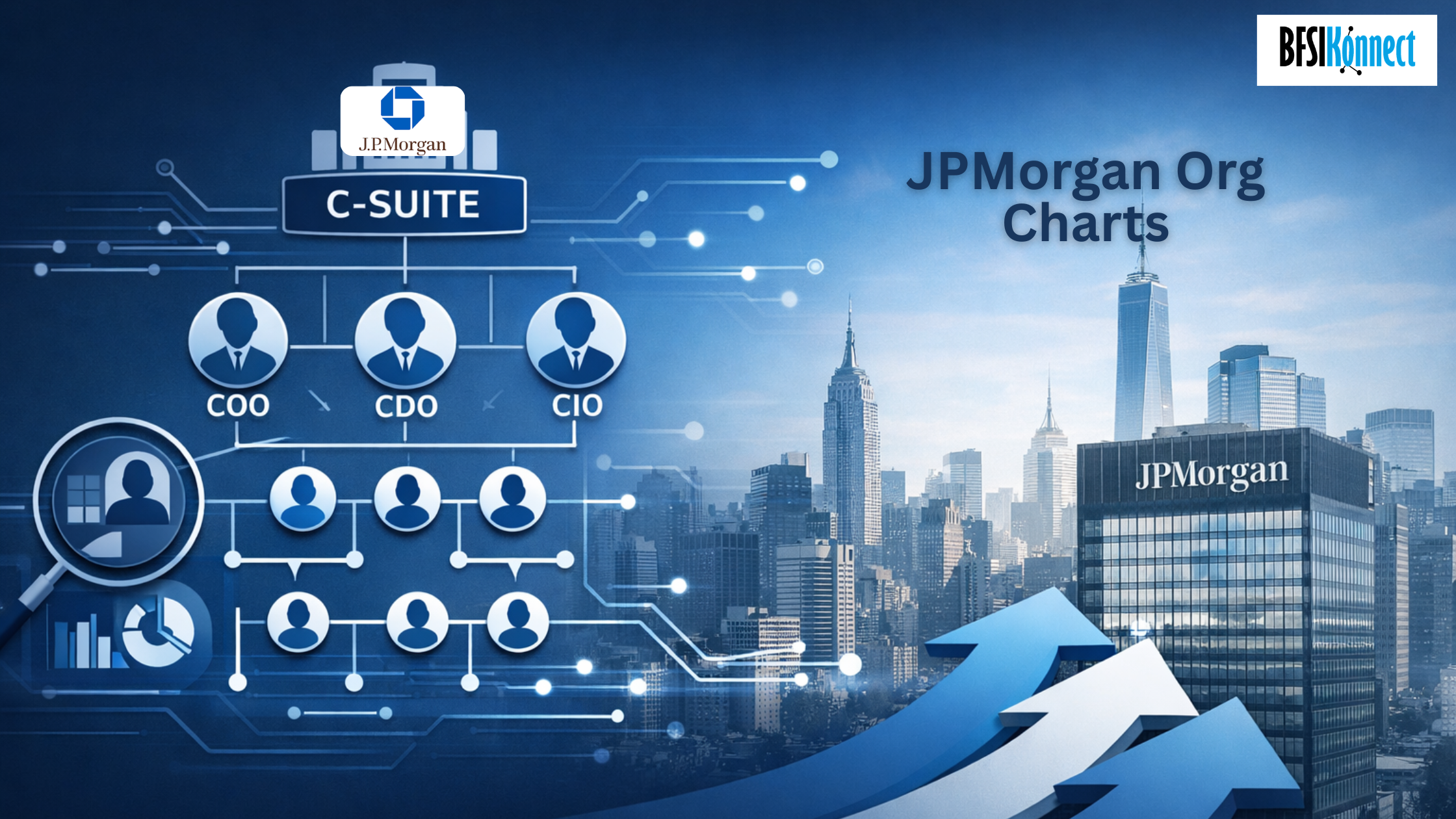
In the first eight weeks of 2026, JPMorgan Chase fundamentally restructured its leadership structure, making the JPMorgan org chart a critical tool for tracking decision-making shifts.
In January, Todd Combs was named to head the Strategic Investment Group. By February, the momentum accelerated: Guy Halamish was appointed Chief Operating Officer (COO) of the JPMorgan Chase Corporate & Investment Bank (CIB), and Zachery Anderson was brought in as the Chief Data Officer (CDO) for Payments.
For B2B sales and marketing teams, this is a systemic collapse of their existing account maps.
When three powerhouse leaders enter the C-suite in sixty days, every reporting line, procurement priority, and strategic initiative shifts. Traditional, static BFSI data become liabilities rather than assets. If your sales intelligence relies on quarterly updates or manual LinkedIn scraping, you are invisible to the new decision-makers at JPMorgan Chase.
Navigating these high-velocity leadership moves requires a transition to live, GenAI-driven BFSI org charts that refreshes weekly to remain actionable.
Why are org charts important in the BFSI industry during leadership transitions?
The financial services sector operates on a foundation of risk management and rigid hierarchy. However, when a "triple-threat" leadership change occurs, which is, spanning strategic investments, operations, and data, it signals a pivot in the bank’s broader thesis.
Guy Halamish’s move to CIB COO, for instance, isn't just a title change, rather it’s a shift in how the Corporate and Investment Bank will manage its vast operational scale. Simultaneously, Zachery Anderson’s arrival as CDO of Payments indicates a massive push toward data-monetization and transactional security within the JPMorgan Chase payments ecosystem.
Without a precise bank org chart, a salesperson might still be pitching "operational efficiency" to a department that has just been absorbed under a new data-centric mandate. Org charts serve as the "GPS" for enterprise deals, allowing teams to:
- Identify the Power Center: New leaders like Combs often bring "new broom" syndrome, where previous vendor relationships are audited.
- Map Influence, Not Just Titles: In BFSI, the "dotted line" reporting relationship is often more influential than the solid line.
- Prevent Multi-Threading Failures: If you are talking to the old guard while Halamish is restructuring the CIB operational stack, your deal is DOA (Dead on Arrival).
How do GenAI-driven BFSI industry org charts solve for sales and marketing alignment?
The primary friction point between sales and marketing in BFSI is lead quality and timing. Marketing often targets by job title, while Sales needs to target by mandate. When JPMorgan Chase leadership moves at the pace we’ve seen in early 2026, the gap between these two functions widens.
GenAI-driven intelligence bridges this by moving away from static database entries toward "contextual account mapping." Instead of seeing a list of names, teams see a living ecosystem within JPMorgan Chase.
The Alignment Framework:
- Trigger-Based Orchestration: When a CDO like Zachery Anderson is hired, GenAI identifies the ripple effect. Who reports to him now? Which legacy data roles were displaced? Marketing can immediately trigger "Data Governance" or "Payments Innovation" tracks, while Sales prepares for discovery calls focused on the new CDO’s 90-day plan.
- Account Mining at Scale: Instead of manual research, AI synthesizes press releases, SEC filings, and newsroom updates to update the insurance company org chart or bank structure in real-time. This ensures that the "Target Account List" (TAL) is always accurate to the current week.
- Personalization at the Persona Level: Knowing that Todd Combs is heading the Strategic Investment Group allows marketing to craft narratives around long-term value and capital allocation, rather than short-term features.
How to use BFSI org charts for B2B lead generation in a volatile market?
To turn an org chart from a generic list into a revenue engine at a firm like JPMorgan Chase, you must apply a "Path to Revenue" framework.
- Identify the "Entry" and "Economic" Buyers
In the case of the 2026 BFSI leadership changes, your entry buyer might be a Director under Zachery Anderson, but the economic buyer is Anderson himself. Your bank org charts must distinguish between those who evaluate and those who sign.
- Map the "Silent" Influencers
Often, when a new C-suite leader joins, they bring a small cohort of trusted advisors from their previous firm. GenAI tools can track these "career clusters." If Anderson came from a specific firm, who else from that firm has joined the bank recently? These are your highest-probability leads.
- Contextual Messaging via Account Maps
An insurance company org chart or a bank map is useless without context. You must tailor your outreach based on the specific business unit's challenges.
CIB Focus: Efficiency, regulatory compliance, global scale.
Payments Focus: Speed, security, merchant experience, data monetization.
Let’s address some Frequently Asked Questions (FAQs)
Q1. What roles are most critical to track in bank org charts?
C-suite, business unit heads, and transformation roles such as COO, CDO, and digital leads have the highest impact on decision-making.
Q2. Why is Zachery Anderson’s role as CDO significant for vendors?
A CDO in Payments represents a shift toward treating transaction data as a strategic asset. For vendors, this means the "Data" department is no longer just IT support; they are now a primary stakeholder in product and revenue conversations.
Q3. How often should a BFSI account map be refreshed?
In the current market, monthly is the bare minimum, but weekly is the standard for high-performance teams. As seen with the JPMorgan changes, three major shifts can happen in 60 days, rendering a 90-day-old map obsolete.
When multiple leadership changes occur within weeks, static account maps become unreliable. Teams risk targeting the wrong stakeholders, missing emerging decision-makers, and misreading priorities. GenAI-driven BFSI org charts address this gap by keeping organizational intelligence current, contextual, and aligned with real-world dynamics.
For teams operating in complex banking environments, staying updated is foundational to effective engagement.
CLICK HERE to explore how BizKonnect helps BFSI-focused sales and marketing teams stay ahead of leadership changes with live, GenAI-driven org charts built for actionable account intelligence.
CLICK HERE to know more with BizKonnect.