


When global IT leader NTT Data established its Silicon Valley-based, AI-native business unit ‘NTT Data AIVista’ under former AWS and DigitalOcean executive Dr. Bratin Saha, it signaled a major structural evolution in the NTT org chart. The launch created an autonomous decision-making hub complete with its own C-suite leadership, strategy teams, and specialized technical steering committees.
Restructurings of this scale occur continuously across global enterprises, as tracked by real-time tools. Yet, when enterprise leaders launch dedicated business units, traditional Go-To-Market (GTM) engines stall. Revenue teams equipped with static CRM contact records routinely miss the crucial window to engage new budget holders before competitors adapt to the shift.
To build pipeline during major corporate realignments, sales and marketing teams must update their GTM strategy, re-evaluate their Ideal Customer Profile (ICP), and replace flat lead lists with real-time, visual account mapping.
(OTHER RELEVANT TECH ORG CHARTS)
Why Legacy CRMs Break Down During Corporate Restructuring
Most traditional CRM systems rely on a linear architecture: a lead enters the database, attaches to a pre-existing account record, and sits assigned to an established contact persona.
This static setup fails revenue teams when a corporate structure shifts for three key reasons:
- Disconnected Contacts: Standard CRMs show individual contacts rather than the web of relationships connecting them. When an enterprise creates a new business unit, legacy contacts become secondary while new steering committees take charge.
- Blindness to New Entities: Spin-outs and specialized units operate as separate legal entities or independent business units (IBUs). Standard data enrichment tools often misattribute new stakeholders to legacy department codes, rendering outbound messaging irrelevant.
- Delayed Signals: By the time a new executive update trickles into a standard database (often 60–90 days later), rival revenue teams have already initiated dialogue with key stakeholders.
To win in complex enterprise environments, modern GTM teams cannot rely on outdated organizational lists. Success requires a dynamic framework capable of tracking executive appointments as they happen.
Evolving the ICP and Mapping the AI Vista Buying Committee
A major enterprise shift requires redefining your Ideal Customer Profile (ICP). Target accounts are no longer just enterprises looking for general cloud software; they are specialized AI units with distinct technical requirements, governance structures, and procurement workflows.
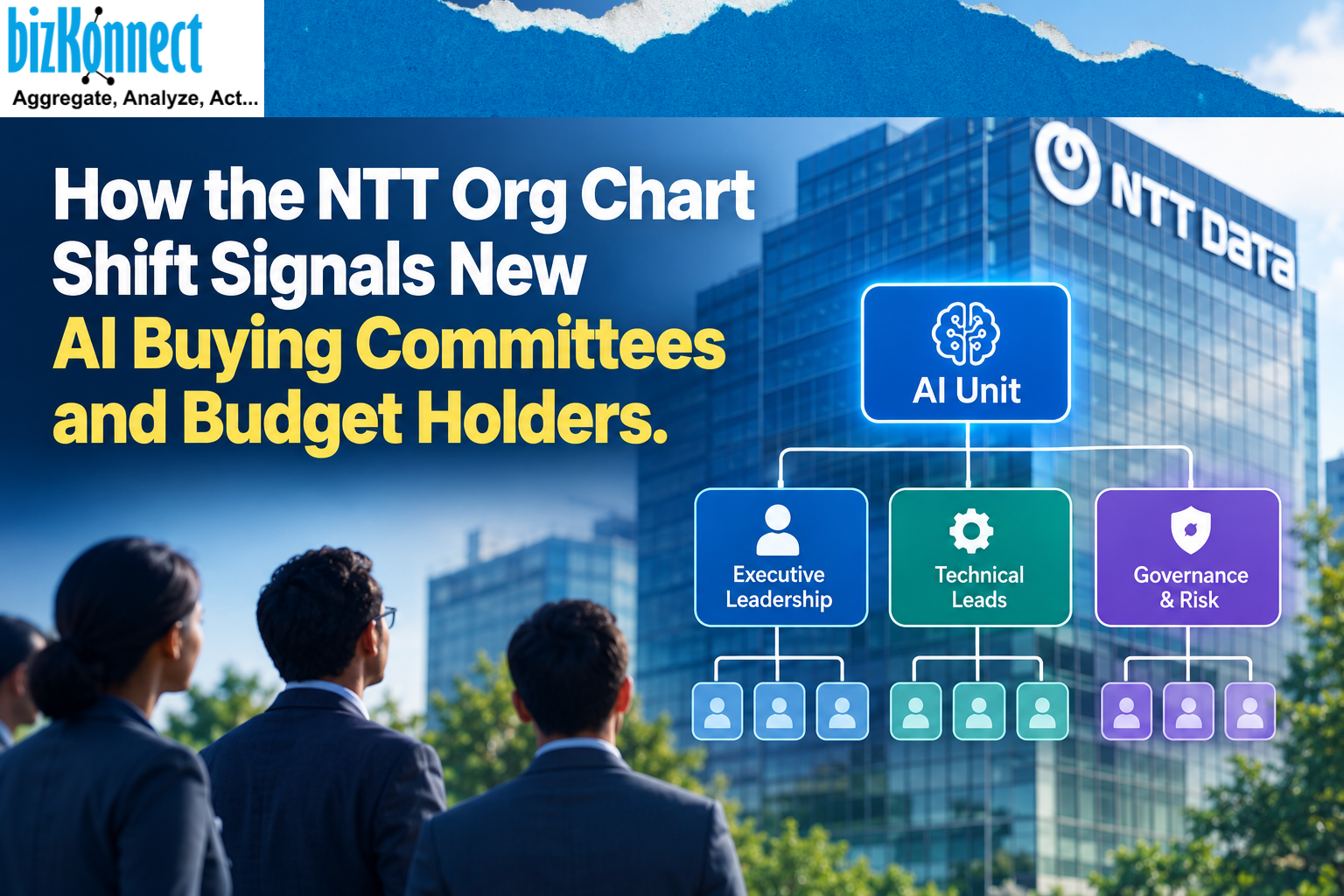
When a company like NTT Data creates a dedicated AI arm, the buying committee expands beyond traditional IT directors. Enterprise AI procurement typically involves three main operational layers:
- The Strategic Capital Allocator (Executive Leadership): C-suite leaders driving organizational transformation, defining strategic bets, and allocating capital for enterprise-wide AI scaling.
- The Technical Gatekeepers (Engineering & Science): Chief Scientists, Principal Applied AI Engineers, and Infrastructure Leads evaluating platform architecture, model observability, and agentic workflows.
- The Risk & Operations Committee (Governance & Strategy): Strategy advisors, compliance officers, and legal directors tasked with managing data privacy, AI ethics, and regulatory risks.
Reaching these distinct personas with a generic email sequence leads to low response rates. Winning GTM teams map these relationships visually using a Gen AI powered NTT DATA org chart, enabling tailored messaging for every persona across the technical and operational spectrum.
A 3-Step Playbook to Update GTM and Engage New Buying Committees
To capture pipeline before competitors catch wind of major realignments, revenue teams must align executive movement signals with real-time account visualization.
Step 1: Detect Early Signals to Refine Target ICPs
Monitor executive movement trends, expansion announcements, and C-suite reshuffles. Early signals—such as a global enterprise launching a specialized AI entity—indicate incoming budget reallocations and updated software vendor needs.
Step 2: Build an Actionable NTT Org Chart
Once a corporate shift is identified, leverage advanced account mapping tools to generate a dynamic view of the target account. An actionable org chart helps sellers trace reporting hierarchies, isolate newly appointed decision-makers, and spot champion-blocker dynamics across parent and subsidiary organizations.
Step 3: Execute Targeted B2B ABM Across the GTM Funnel
With a clear account map in place, launch precision b2b abm campaigns across the entire decision-making unit:
- For Technical Leads: Focus messaging on API integration, model latency, security compliance, and platform infrastructure scalability.
- For Executive Leads: Emphasize time-to-market, ROI acceleration, and operational efficiency.
Why Real-Time B2B Data Drives Pipeline Velocity
In enterprise B2B sales, timing dictates conversion rates. Reaching out to an executive six months after an appointment often means arriving after vendor choices are locked in. Connecting within the first 60 days of a major leadership shift or subsidiary launch allows sales teams to participate in shaping the vendor requirements.
Leveraging b2b data enriched with organizational relationships empowers GTM teams to transform raw market updates into qualified opportunities.
Frequently Asked Questions
How do new business unit launches affect enterprise purchasing decisions?
Launching a new unit or subsidiary creates dedicated budget pools and autonomous leadership structures. While parent companies maintain overall alignment, the new entity's leadership team exercises independent authority over vendor selection, software procurement, and technical infrastructure.
How does an enterprise shift affect a company's Ideal Customer Profile (ICP)?
When an enterprise launches a specialized arm, the target ICP shifts from general enterprise personas to specialized leaders (e.g., Applied AI Scientists, Platform Architects, Governance Heads). GTM strategies must adapt to target these specific roles rather than legacy IT managers.
Why are flat contact lists insufficient for Account-Based Marketing (ABM)?
Flat contact lists store names and titles without capturing reporting lines or influence networks. An effective abm strategy relies on visual account mapping to help sales representatives identify missing decision-makers and execute multi-threaded outreach.
What sets an actionable org chart apart from a standard company directory?
A standard directory lists isolated names and titles. An actionable org chart offers a visual layout of reporting hierarchies, functional roles, and inter-departmental connections, enabling GTM teams to engage entire buying committees effectively.
Streamline Your Enterprise Account Mapping Strategy
Don't let legacy CRM structures hide high-value enterprise opportunities. Upgrade your Go-To-Market execution with real-time enterprise insights, interactive organization mapping, and verified decision-maker intelligence tailored for high-impact ABM.
Want to transform how your team targets enterprise accounts? Discover how dynamic account mapping and customized organizational charts by BizKonnect can help you identify, map, and engage key decision-makers today.
CLICK HERE to know more with BizKonnect.