


B2B lead generation has never been harder and yet, never more possible. Decision-makers today receive bulk outreach messages a week. Inboxes are cluttered, LinkedIn DMs (direct messages) feel transactional, and a single cold email rarely gets noticed.
Sales teams at growing SaaS companies and mid-market businesses are spending more on lead generation campaigns but seeing thinner pipelines in return. The disconnect isn't effort, it's strategy. Most teams are still running single-channel plays in a multi-channel world.
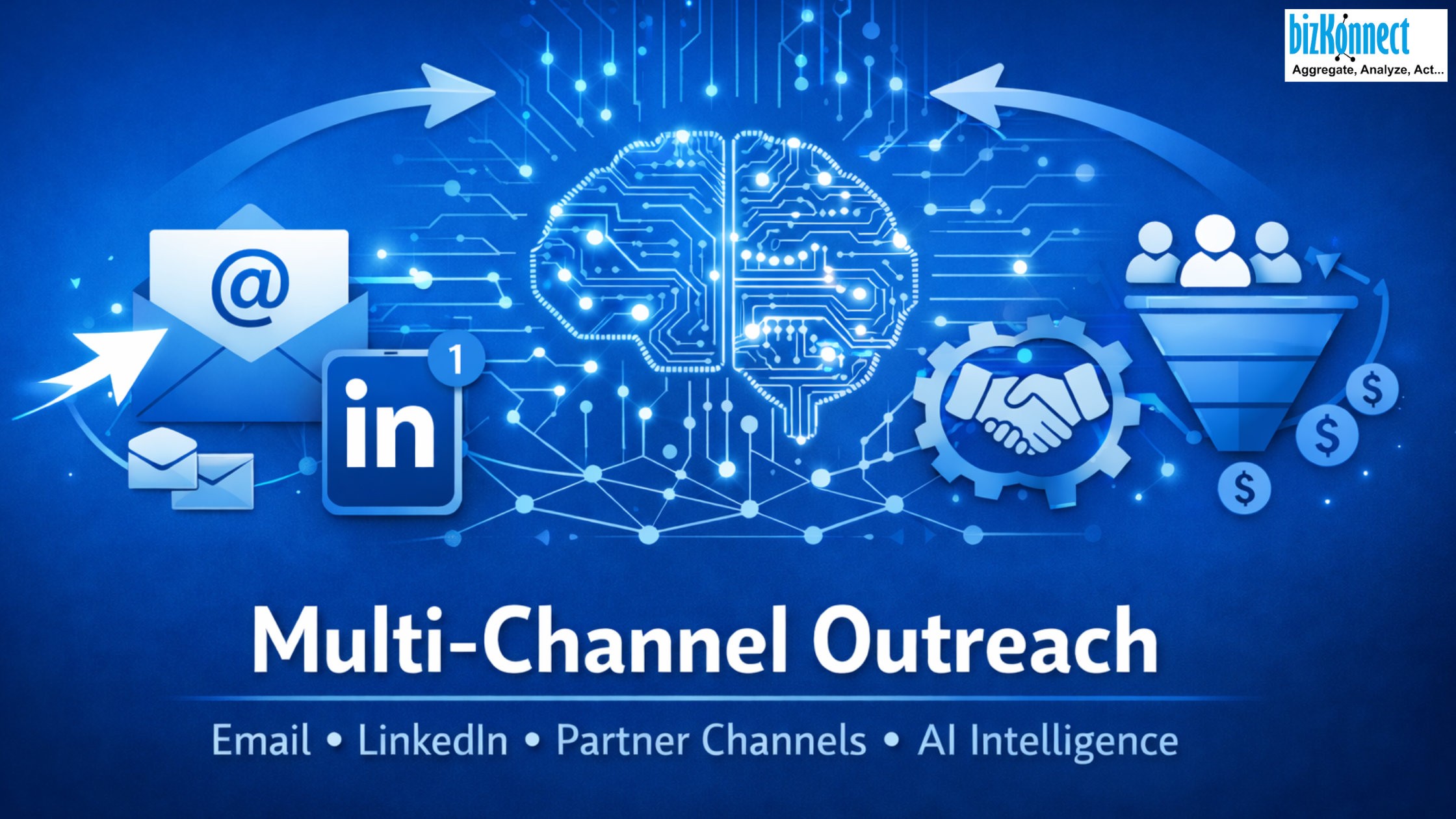
In 2026, the organizations winning on demand generation are those combining email, LinkedIn, partner channels, and AI-driven intelligence into one coordinated outreach engine.
So, what exactly is lead generation and why does the definition matter now?
Lead generation is the process of identifying potential buyers, engaging them across relevant touchpoints, and nurturing interest until they're ready for a sales conversation. Traditionally, this meant cold email or form fills. Today, the lead generation process steps look very different:
- Research
- Intent signal capture
- Multi-channel engagement
- Qualification
- Handoff
Because buyers are now changed. They research independently, engage anonymously, and only surface when they're ready. That means your outreach has to meet them across every channel they use, not just the one you prefer.
Does running outreach on multiple channels actually perform better?
Yes, multi-channel lead generation campaigns generate nearly 3x higher response rates than single-channel efforts. Why? Because each channel reinforces the last. A prospect who ignored your email might respond to a LinkedIn message that references it. A partner referral that follows a warm email sequence lands with far more trust.
Here's what a winning multi-channel sequence actually looks like:
- LinkedIn profile view: creates passive awareness before you say a word
- Personalized email: opens the conversation with a clear value hook
- LinkedIn connection request: references the email to create continuity
- LinkedIn DM (Direct Message): keeps tone conversational, not salesy
- Phone or video message: deployed only after digital familiarity is established
- Partner referral or warm intro: closes the trust gap faster than any cold touch
Each step builds on the last. That's the difference between outreach that feels coordinated and outreach that feels like spam.
How do you generate B2B leads without sounding like every other vendor in the inbox?
The answer is context. Generic outreach fails because it treats every prospect the same. Effective B2B lead generation services are now built on account-level intelligence, knowing what a company is going through before you reach out.
This is where GenAI-driven org insights are changing the game.
AI can now help you analyze a prospect company's hiring trends, recent leadership changes, product launches, funding events, and competitive signals, surfacing this as an updated context for your outreach. Instead of "We help companies like yours with X," your message becomes "We noticed you recently expanded your sales team in APAC. Here's how we've helped similar companies ramp pipeline in that region in under 90 days."
That level of accuracy and efficiency is what converts. Actionable sales intelligence solutions powered by GenAI are no longer a luxury for enterprise teams, they're table stakes for any serious lead generation company operating at scale.
Where does the partner channel fit into this mix?
Partner channels such as referrals, resellers, technology alliances, and co-selling motions are the most underused lever in B2B lead generation for SaaS companies. A warm referral from a trusted partner compresses the trust-building cycle immensely. The prospect already has a relationship with the referring party, which means your first conversation starts halfway down the funnel.
The key is activating this channel intentionally:
- Share curated content and enablement assets with partners so they can refer with confidence
- Create co-branded campaigns that benefit both audiences
- Track referral attribution properly because most CRMs (Customer Relationship Management systems) underreport partner-sourced pipeline
When partner activity is coordinated with your email and LinkedIn sequences, you create what some call a "surround sound" effect. Here, the prospect encounters your brand through multiple trusted sources in a short window, which accelerates buying decisions.
Is there a right way to sequence these channels, or does it depend?
Both. There are sequencing frameworks that consistently outperform but they should be adapted to the prospect's seniority, industry, and buying cycle.
The relationship-first sequence works well for senior enterprise buyers: LinkedIn engagement (commenting on their posts) → connection request → email → DM. You earn the right to their attention before asking for it.
The value-delivery sequence works well for SaaS and tech buyers: share a relevant insight via email → follow up with a LinkedIn resource → follow up with a partner-triggered introduction. This positions you as a resource, not a vendor.
What doesn't work is treating all prospects identically.
A VP (Vice President) of Sales and a technical CTO (Chief Technology Officer) need different messages, different channels, and different timing. AI-powered sequencing solutions can now personalize this at scale, adapting timing, channel, and message based on engagement behavior.
Conclusion:
Multi-channel outreach in 2026 isn't about being everywhere, it's about being in the right place, with the right message, at the right moment. GenAI makes that possible at scale. The teams that combine email, LinkedIn, partner channels, and GenAI-driven intelligence into a single coordinated motion are the ones turning demand generation into a repeatable, predictable engine.
With these challenges and evolving strategies in mind, questions naturally emerge and here are the most important ones answered.
Frequently Asked Questions (FAQs)
Q1. The partner channel sounds powerful but how do you keep partner-sourced leads from falling through the cracks?
The biggest failure point is attribution and follow-up. Use a CRM that supports partner tagging at the lead level, set clear SLAs (Service Level Agreements) for follow-up within 24 hours of a referral, and create a shared visibility layer so partners can see what happened with the leads they sent. When partners see results, they refer more.
Q2. Is LinkedIn outreach still effective in 2026, given how flooded it's become?
Yes, but the bar for quality is higher. Connection request acceptance rates have dropped industry-wide, which means generic InMails are being ignored. What works now is engagement before outreach: comment on their posts, react to their company updates, and engage with their content before sending a direct message. This creates familiarity that makes your outreach feel like a natural continuation.
Q3. What metrics should a lead generation company actually track across multi-channel campaigns?
Track reply rate by channel, meeting-to-opportunity conversion, channel-influenced pipeline, and time-to-response by sequence step. Multi-touch attribution models where credit is shared across every channel that influenced a conversion give a real picture of what's actually working.
If you are ready to strengthen your lead generation strategy with data-driven multi-channel precision, BizKonnectcan help. CLICK HERE to see how the right insights and outreach framework can turn conversations into qualified opportunities.