


Next year's budget priorities do not wait until January. In November, revenue, operations, and functional leaders are already setting 2027 goals, mapping bottlenecks, and narrowing down the partners or tools they plan to evaluate when calendars reset.
By the time a buyer books a discovery call or replies to a rep, much of the early filtering has already happened behind closed doors. Research shows that 94% of business buyers use AI during their buying process, yet many double-check AI summaries through peers, analysts, and trusted voices because answer engines can leave gaps or feel incomplete. Meanwhile, G2's 2026 buyer research highlights that buyers lean heavily on peer review platforms and AI-assisted research to form shortlists early, while finance and procurement scrutinize risk, total cost, and payback timelines well before a contract is signed.
Waiting for Q1 inbound requests leaves your brand absent from those early conversations. If you are not visible while teams define next year's priorities, you spend the spring trying to dislodge incumbents or late-stage frontrunners that already fit how the buyer frames the problem.
Why Buyers Vet Vendors Quietly Across Larger Groups
Modern B2B purchases rarely belong to a single decision-maker. Forrester data indicates that buying groups now average 13 internal stakeholders and nine external participants, with procurement acting as a decision-maker in 53% of business buying cycles from the outset.
Because stakes are high and internal resistance to new initiatives or AI-driven workflows has grown, buyers look for lower risk rather than flashy claims. A champion inside the company has to justify spend to leadership, align with technical or operational owners, and satisfy finance and security questions. Even when buyers run trials or pilots, which over 60% of business buyers use to test fit, they want clear proof of workflow compatibility and measurable return.
When vendors push for an immediate call or a hard close in late autumn, it often clashes with how teams actually operate in November and December. Buyers at this stage are comparing options, building internal business cases, and protecting year-end bandwidth, not rushing into a rushed sign-off.
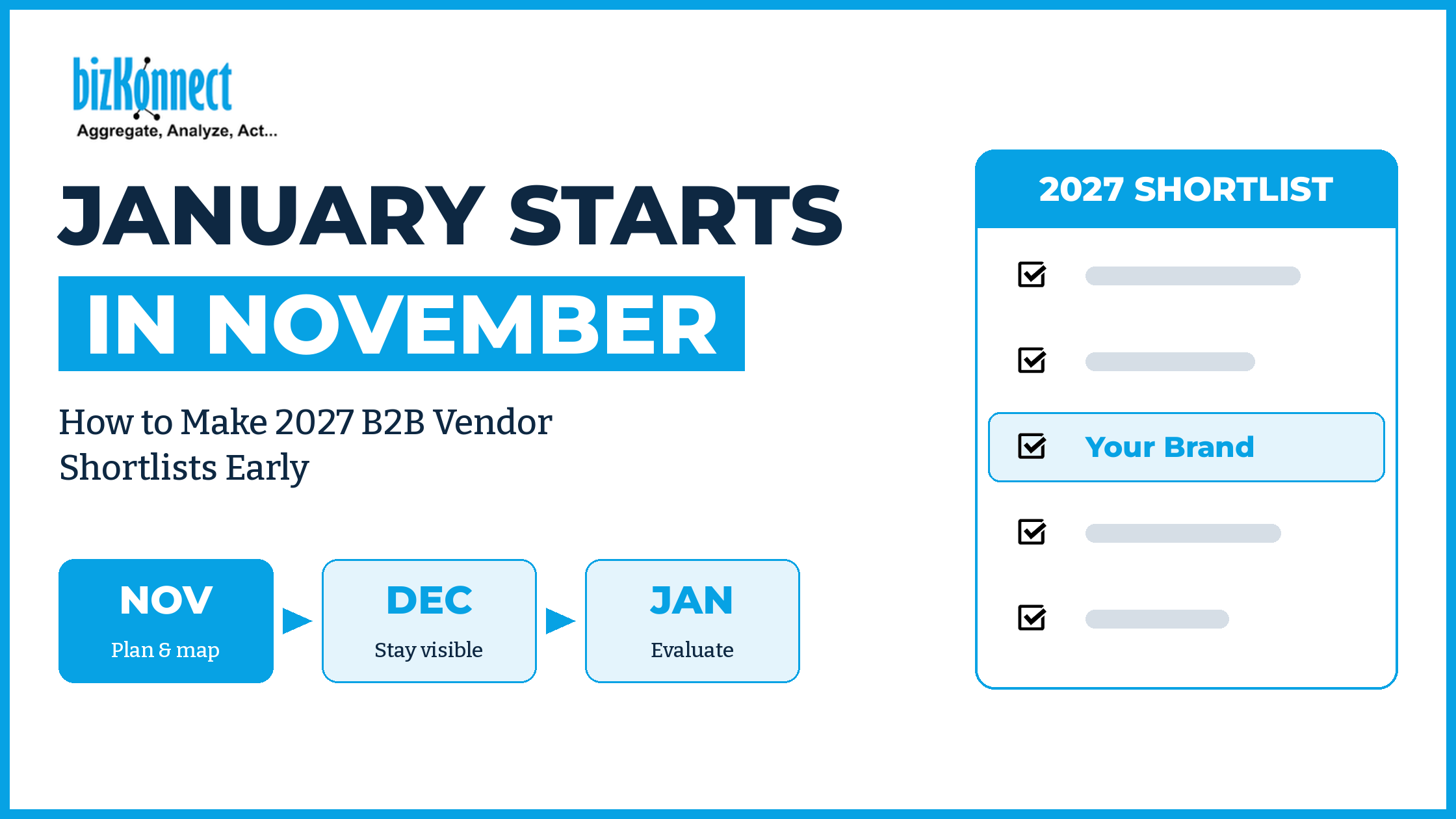
A Practical November-December Visibility Plan for Starting 2027
Getting onto next year's shortlist requires helping buyers do the hard work of alignment and risk reduction. A focused visibility plan across November and December centers on four steps:
- Spot 2027 initiatives early: Track hiring shifts, leadership moves, tech stack changes, and strategic announcements that signal where accounts plan to invest or consolidate next year.
- Map decision-makers and validators: Identify not just the budget or functional owner, but also the technical evaluators, RevOps or IT leads, and finance or procurement voices who shape approval.
- Publish evaluation-ready material: Share clear comparisons, implementation steps, integration details, security posture, and realistic ROI or payback notes that champions can pass around internally.
- Stay present through December without forcing a close: Keep helpful, relevant touchpoints going across email, social, and account outreach so your brand stays top of mind while teams plan, making it easy for them to start a real evaluation when ready.
Pair structured account intelligence with human-verified outreach and clean CRM tracking, and your team can keep every signal, stakeholder role, and follow-up organized without letting leads slip through the cracks over the holidays.
Frequently Asked Questions
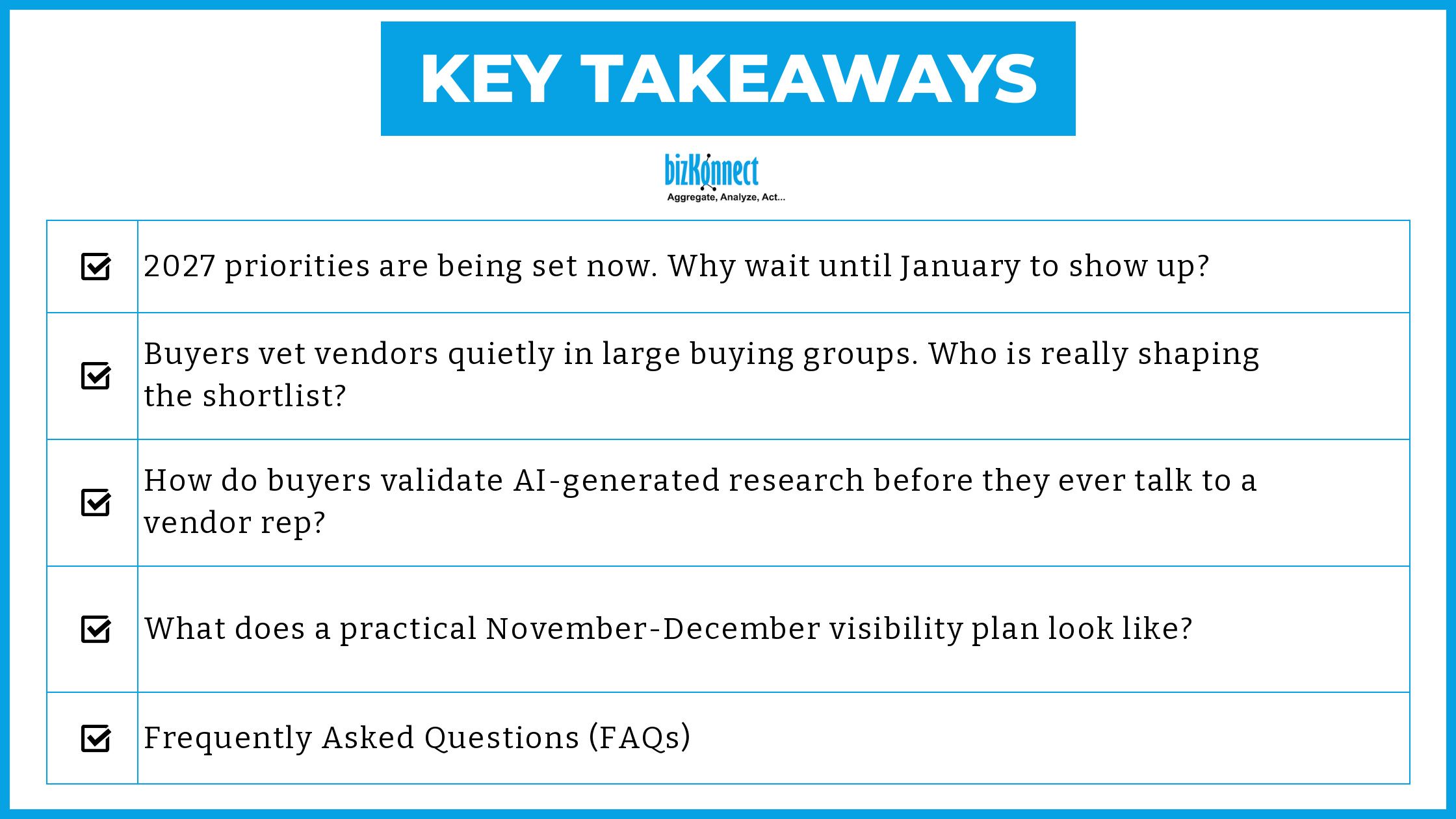
1. Why should B2B teams focus on 2027 shortlists in November instead of waiting until January? Many organizations plan next year's priorities and narrow down initial options in Q4. Showing up during planning helps you shape how problems are framed before competitors lock in early mindshare.
2. How do buyers validate AI-generated research before talking to vendors? Buyers frequently cross-check AI summaries with peer reviews, colleagues, industry experts, and real-world proof to guard against incomplete or inaccurate claims.
3. Who needs to see your content during early-stage evaluation? Beyond the primary executive or department lead, technical validators, operations teams, and finance or procurement stakeholders often influence whether an option moves forward.
4. What kind of content helps an internal champion build a business case? Plain-language guides covering setup effort, system compatibility, risk controls, customer proof, and expected return make it easier for internal advocates to defend a choice to peers and leadership.
5. How should outbound and marketing follow up in December without sounding pushy? Focus on useful context, brief check-ins tied to known initiatives, and low-friction resources rather than end-of-year pressure tactics, respecting how teams manage year-end priorities.
Want to pinpoint which target accounts are gearing up for 2027 initiatives and map their buying groups before year-end? Reach out to see how structured account intelligence and managed outbound support can keep your pipeline warm through December and ready for January.
CLICK HERE to know more with BizKonnect.