


Most Healthcare Information System (HCIS) providers, whether they are scaling EHR/EMR platforms, Telehealth modules, or Revenue Cycle Management (RCM) software, find that the difference between a stalled pipeline and a closed deal lies in the quality of their initial access.
In the complex ecosystem of hospitals and medical groups, an actionable sales intelligence-driven healthcare IT email list serves as the foundation for this access. It acts as the bridge between a dynamic solution and the specific individual currently feeling the pain that software solves. From CMIOs concerned with clinician burnout to CFOs eyeing the bottom line, precision targeting is the only way to navigate these fragmented interests.
This guide explores how actionable sales intelligence-driven data transforms static outreach into a high-conversion engine by solving the "access" problem at its root, ensuring your message reaches the right desk at the right time.
Why Does Generic Outreach Fail in the Modern Healthcare Tech Stack?
The primary reason healthcare B2B leads fail to convert is the "title-inflation" challenge.
In a large hospital system, a "Director of IT" might manage hardware procurement, while the actual decision-power for an EMR integration lies with a Chief Medical Information Officer (CMIO). Generic approaches often overlook these nuances, leading to weeks of wasted "not my department" redirects.
In the rapidly evolving healthcare landscape, digital shifts are massive but often siloed. Many digital health initiatives struggle to move beyond the pilot phase because they fail to achieve early alignment with the correct internal stakeholders. When your outreach hits a generic inbox, you aren't just missing a person, instead you are missing the context of their specific tech stack.
Effective outreach requires "outreach-ready" data. This means moving beyond a name and an email to understand:
- The Tech Environment: Is the prospect currently using a legacy HIS that your API can easily replace?
- Company Size and Revenue: A specialty clinic has vastly different procurement hurdles than a multi-specialty hospital system.
- Role-Specific Pain: A CTO cares about interoperability; a Practice Administrator cares about patient throughput.
How Do You Identify the Specific "Economic Buyer" for HCIS Solutions?
The "Economic Buyer" in healthcare is rarely a single person. Depending on the solution, the entry point shifts. If you are selling a Patient Engagement platform, your target is likely the Head of Digital Health. If you are selling RCM software, it’s the Revenue Cycle Leader.
To find a healthcare IT decision makers email list that actually works, you must map your solution to the specific trigger points of these roles:
- Clinical Leaders (CMIO, CNIO): They are the gatekeepers of adoption. If the software adds three clicks to a doctor’s workflow, it’s a non-starter.
- Technical Leaders (CIO, CTO): They focus on the "plumbing" such as security, compliance, and cloud vs. on-premise stability.
- Operations Leaders (Practice Administrators, COOs): They are the most responsive to "Revenue" and "Efficiency" messaging.
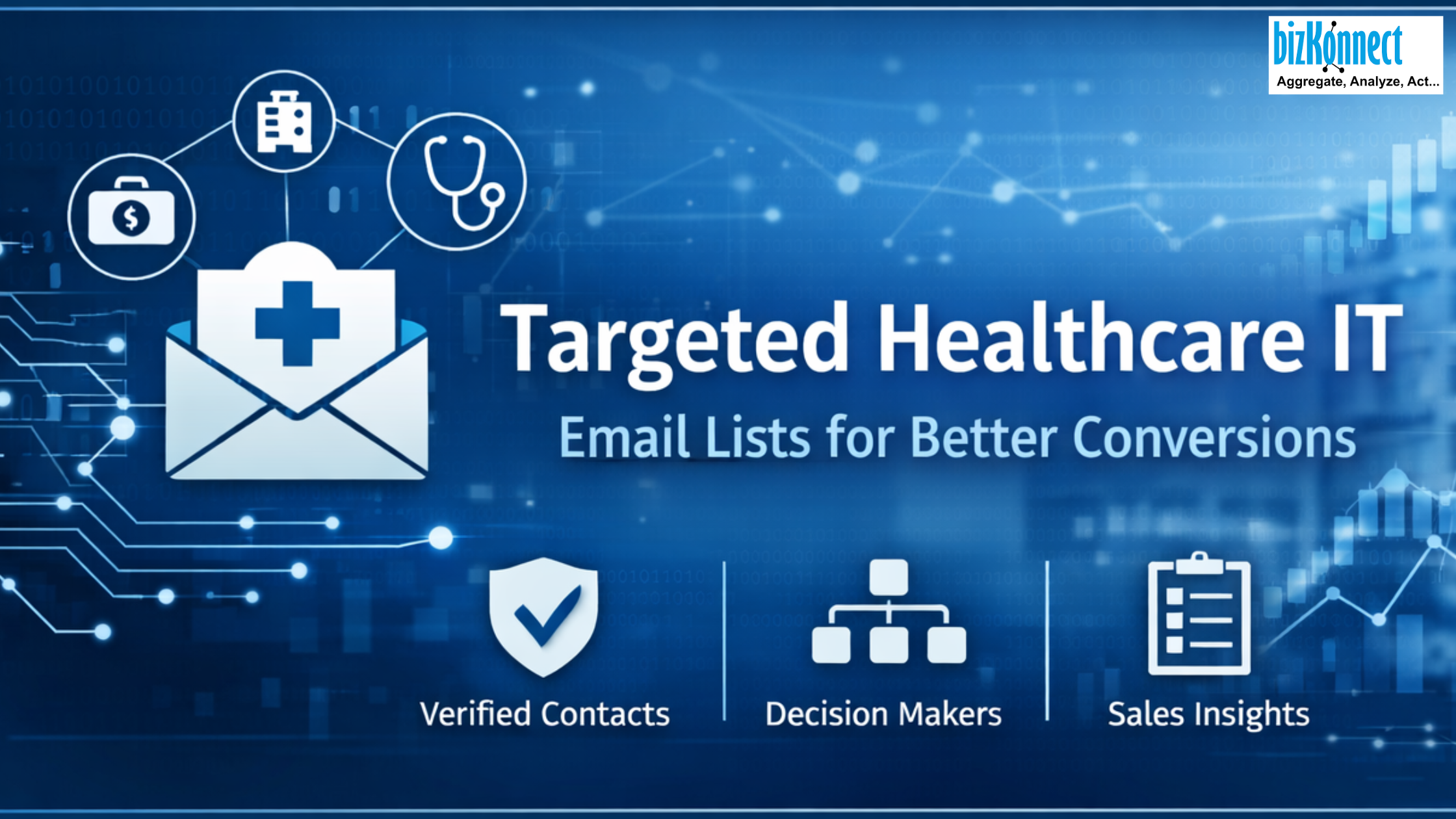
High-authority, actionable sales intelligence differentiates itself by offering verified business emails and LinkedIn profiles for a multi-channel approach. This ensures you skip the vague roles and connect straight to the real buyers who have the authority to move a pilot forward.
Can Actionable Sales Intelligence Solve the "Data Decay" Problem in Healthcare?
Healthcare is an industry characterized by high turnover and rapid restructuring, especially within IT departments. A healthcare B2B email list must be dynamic to remain effective. "Stale data" doesn't just lower your reply rates, it damages your domain sender reputation and wastes valuable sales cycles.
Actionable intelligence focuses on "Zero-Quality Risk." This involves a human-in-the-loop verification process where emails are tested for deliverability. Real-world sales success in this sector depends on:
- Role-Based Precision: Targeting "Hospital CIOs" specifically for EHR outreach rather than a broad "IT" category.
- Firmographics: Segmenting lists by hospital size, geographic region, and ownership type.
- Multi-channel Readiness: Having the LinkedIn URL alongside the verified email allows for a "surround-sound" approach, increasing the likelihood of a touchpoint being noticed.
By utilizing lists that offer verified contacts and insights on company scale, marketing teams can focus on crafting the narrative rather than cleaning spreadsheets.
How to Leverage Segmented Lists for Personalized Outbound Campaigns?
Personalization is often mistaken for "inserting the first name." In healthcare IT, real personalization is demonstrating knowledge of the prospect's specific challenges.
If you are reaching out to a Revenue Cycle Leader, your intelligence-driven list should allow you to segment your messaging. For example:
Segment A (Small Clinics): Focus on ease of implementation and low upfront costs for Practice Management tools.
Segment B (Large Hospital Groups): Focus on scalability, multi-site data consolidation, and LIS/RIS integration.
The most successful teams use a "Pilot List" approach.
Instead of buying thousands of unverified leads, they acquire a targeted sample of high-intent contacts. This allows for A/B testing of messaging across different roles, testing whether the CIO or the CMIO is the more effective "wedge" into a specific hospital system for a particular geographic region.
Addressing Some Frequently Asked Questions (FAQs)
Q1. How do I ensure my healthcare IT email list is compliant with data privacy laws?
Ensure your provider sources data from public business records and verified professional profiles. High-quality intelligence providers focus on B2B business emails and LinkedIn profiles, providing a clear path for professional outreach that respects privacy standards.
Q2. How often should healthcare sales data be refreshed?
Given the frequency of hospital mergers and leadership changes, data should ideally be verified at the point of delivery. Using a provider that offers replacements for any inaccuracies ensures your campaign metrics remain clean.
Q3. Should I target the CIO or the CMIO for EHR/EMR sales?
It depends on the stage of the sale. The CMIO usually drives the "need" and clinical buy-in, while the CIO manages the technical "veto" and integration. High-quality lists allow you to target both simultaneously with role-specific messaging.
To bridge the gap between a great healthcare product and a signed contract, accuracy and relevance is your most valuable asset. If you are ready to start engaging with the stakeholders who matter most, CLICK HERE to see how BizKonnect can fuel your next campaign with a tailored, actionable sales intelligence-driven sample list.
CLICK HERE to know more with BizKonnect.